FREE Dispatch Fee on Any Drain Call




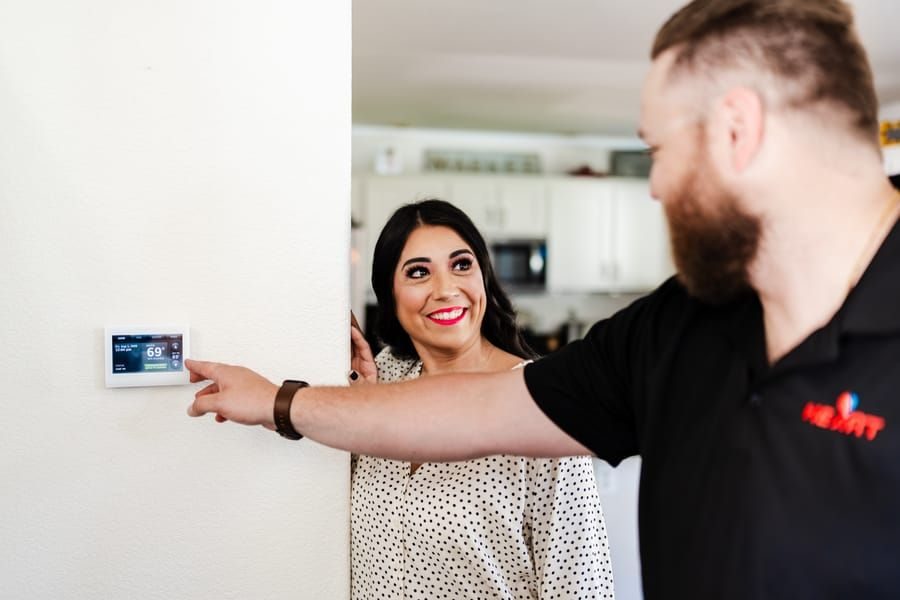
Heart Heating, Cooling, Plumbing & Electric provides smart thermostat installation, replacement, setup, and troubleshooting throughout Metro Denver. We verify compatibility before installation, connect the thermostat correctly, configure it for the equipment, and test each operating mode.
A smart thermostat is only as effective as the system it controls. If the home has airflow problems, failing equipment, or an incorrectly sized system, replacing the wall control will not correct the underlying issue.
Smart Thermostat Installation Services
Our thermostat services include:
-
New smart thermostat installation
-
Traditional thermostat replacement
-
Customer-provided thermostat installation
-
HVAC compatibility checks
-
Thermostat wiring and common-wire evaluation
-
Heating and cooling configuration
-
Heat pump and auxiliary heat setup
-
Dual-fuel thermostat configuration
-
Multi-stage equipment setup
-
Remote sensor installation and placement
-
Wi-Fi connection and basic app setup
-
Thermostat troubleshooting and replacement
After installation, we test the equipment rather than assuming a powered display means the thermostat is working correctly. Heating, cooling, fan operation, staging, and connected accessories must respond as intended.
Why Professional Installation Matters
Thermostat wiring may appear simple, but wire colors alone do not confirm what each conductor controls. Older Denver homes may have reused wiring, undocumented equipment changes, splices inside walls, or too few conductors for a modern thermostat.
An incorrect connection or configuration can cause:
-
Heating or cooling that does not start
-
The fan to operate at the wrong time
-
A heat pump to run in the wrong mode
-
Auxiliary heat to activate unnecessarily
-
Short cycling
-
Blown low-voltage fuses
-
Loss of equipment staging
-
A humidifier or other accessory to stop working
-
Thermostat power interruptions
-
Damage to control components
We identify the equipment and trace the existing controls before connecting the new thermostat. Once installed, the thermostat is configured for the actual system rather than left on generic factory settings.
Smart Thermostats and Denver’s Temperature Swings
Front Range weather can change considerably within a single day. A sunny winter afternoon may reduce the home’s heating load, while temperatures fall quickly after sunset. Spring and fall can bring days when a home needs heating in the morning and cooling later.
Smart scheduling, remote access, and properly placed sensors can help homeowners respond to these changes without repeatedly adjusting the thermostat. The device can also reduce unnecessary operation when the house is unoccupied.
Aggressive temperature setbacks are not always beneficial, however. A furnace may recover quickly from a setback, while a heat pump can require a longer recovery period or activate supplemental heat. We configure schedules around the equipment and household instead of assuming the same strategy works for every Denver home.
Thermostat Compatibility Checks
Not every smart thermostat works with every heating and cooling system. Compatibility depends on more than whether the thermostat fits on the wall.
Before installation, we evaluate:
-
HVAC system type
-
Number of heating and cooling stages
-
Heat pump reversing-valve operation
-
Auxiliary or emergency heat
-
Dual-fuel controls
-
Boiler or hydronic-zone controls
-
Communicating equipment
-
Available thermostat wiring
-
Control-board terminals
-
Accessory connections
-
Transformer capacity
-
Manufacturer requirements
Some high-efficiency or communicating systems use proprietary controls. Replacing the original thermostat with a universal model can disable modulation, diagnostics, humidity control, or other equipment functions. In those cases, retaining or upgrading within the manufacturer’s control platform may provide better performance.
Common-Wire and Power Requirements
Most smart thermostats require continuous low-voltage power. A common wire, often called a C-wire, completes that circuit without drawing power through the heating or cooling call.
Some Denver homes have a C-wire already connected. Others have an unused conductor behind the thermostat that can be connected at the control board. Older homes may have only two or four conductors, requiring a new cable, an approved adapter, or another equipment-specific solution.
Power-stealing configurations and improvised wiring can cause intermittent shutdowns, relay chatter, short cycling, or control-board problems. We determine how the thermostat will receive reliable power before installation.
Smart Thermostats for Furnaces and Central Air Conditioners
Most conventional furnace and central air-conditioning combinations can work with a compatible smart thermostat. The thermostat must be configured for the correct fuel type, fan control, and number of stages.
Two-stage and variable-capacity equipment requires additional attention. Some systems allow the thermostat to control staging, while others manage capacity through the furnace or air conditioner’s internal controls. The installation should preserve the operating features the equipment was designed to provide.
A thermostat problem can sometimes resemble an equipment failure. If the system still does not heat or cool correctly after the control is verified, our furnace services and air-conditioning services address the equipment itself.
Smart Thermostats for Heat Pumps and Dual-Fuel Systems
Heat pumps require controls that can manage the compressor, reversing valve, auxiliary heat, and emergency heat. Incorrect settings can cause the system to cool when heating is requested or rely too heavily on supplemental resistance heat.
Dual-fuel systems combine a heat pump with a gas furnace. Their controls must determine when to stop heat-pump operation and transition to the furnace. Outdoor temperature, equipment capacity, operating cost, and manufacturer requirements can all influence that changeover strategy.
A compatible thermostat should be selected and configured as part of the broader heat pump system, not treated as an independent gadget. Proper control helps both heat sources operate in the intended sequence.
Thermostats for Boilers and Hydronic Heating
Boilers may use thermostat controls that differ substantially from forced-air HVAC systems. A home can have several hydronic zones, zone valves, circulator controls, relays, or a combination of radiant heat and baseboards.
Some smart thermostats can control these systems directly, while others need an isolation relay, power adapter, or separate transformer. Line-voltage thermostats cannot be replaced with standard low-voltage models without changing the control arrangement.
For multi-zone boiler systems, we evaluate each thermostat and zone independently. A replacement should preserve reliable zone operation without overloading the boiler controls.
Smart Thermostats, Mini-Splits, and Ductless Equipment
Many ductless mini-splits use proprietary remotes or manufacturer-specific communicating controls. A conventional smart thermostat may require an interface and may not retain every variable-speed or comfort feature.
Wi-Fi adapters or manufacturer applications can often provide remote access without converting the system to a traditional thermostat. The correct approach depends on the model and how the homeowner wants to control it.
When thermostat-style control is part of a new mini-split installation, it should be considered during system design rather than added after the equipment is operating.
Remote Sensors and Uneven Temperatures
A thermostat controls the system based on the temperature it senses. If it is installed in a hallway, near an exterior door, beside a supply register, or where direct sunlight reaches the wall, its reading may not represent the rooms where people spend time.
Wireless room sensors can help by measuring conditions elsewhere in the home. Depending on the thermostat, the system may prioritize one sensor, average several rooms, or follow different sensors at different times.
Sensors can improve control when room use changes throughout the day, but they cannot redirect airflow on their own. Persistent temperature differences may indicate duct restrictions, insulation problems, air leakage, solar gain, or an HVAC design issue that needs separate evaluation.
Controlling Whole-Home Humidity
Some smart thermostats can control compatible humidifiers and other indoor-air-quality accessories. The available functions depend on the thermostat, accessory, wiring, and HVAC controls.
For Denver homes, humidity control should account for outdoor temperature and condensation risk. A fixed setting that works during mild weather may be too high during a cold snap.
When integrating a whole-home humidifier, we verify whether the thermostat can provide the required control sequence or whether a dedicated humidistat remains the better option.
Smart Thermostat Replacement and Troubleshooting
A thermostat may need replacement when its display fails, temperature readings become unreliable, Wi-Fi functions no longer work, internal relays stick, or the device is no longer supported. Replacement may also be appropriate after new HVAC equipment changes the home’s control requirements.
Thermostat-related warning signs include:
-
A blank or repeatedly restarting display
-
Heating or cooling that does not respond
-
Incorrect indoor-temperature readings
-
Frequent loss of Wi-Fi connection
-
Unexpected schedule changes
-
Short cycling
-
Equipment running past the set temperature
-
Auxiliary heat operating too often
-
One HVAC mode working while another does not
-
Error messages that return after resetting
Not every control problem originates at the thermostat. A tripped float switch, blown fuse, failed transformer, condensate problem, damaged wire, or equipment safety lockout can interrupt thermostat operation. We identify the source before recommending replacement.
What a Smart Thermostat Can and Cannot Do
Smart thermostats can provide useful scheduling, remote control, temperature alerts, operating history, and maintenance reminders. Some models can also respond to occupancy or utility programs when homeowners choose to enable those functions.
A smart thermostat cannot:
-
Repair failing HVAC equipment
-
Increase the capacity of an undersized system
-
Correct poor duct design
-
Balance airflow between rooms
-
Replace routine maintenance
-
Guarantee energy savings
-
Overcome severe air leakage or inadequate insulation
-
Provide every advanced feature with every HVAC system
Energy use depends on the home, weather, equipment, schedule, and settings. The most sophisticated thermostat can waste energy if it is configured incorrectly or used with an inappropriate recovery strategy.
Our Smart Thermostat Installation Process
We begin by identifying the HVAC equipment and reviewing the existing control wiring. This allows us to confirm compatibility before the old thermostat is removed.
A typical installation includes:
-
Inspecting the heating, cooling, and control equipment
-
Confirming thermostat and wiring compatibility
-
Identifying available conductors and power requirements
-
Removing the existing thermostat
-
Mounting and wiring the new control
-
Configuring equipment type, stages, and accessories
-
Connecting Wi-Fi and basic application functions when requested
-
Testing heating, cooling, fan, and supplemental heat operation
-
Reviewing basic settings and schedules with the homeowner
The final test is essential. We confirm that the HVAC system responds correctly to the new thermostat and explain any settings that should not be changed without understanding their effect on the equipment.
Professional Solutions That Put You First
We provide reliable, people-first service designed to meet your unique needs with care and professionalism. Our team is committed to delivering consistent results, clear communication, and dependable support you can trust. From start to finish, we focus on quality, responsiveness, and building lasting relationships through service delivered with heart.Smart Thermostat Installation From a Denver HVAC Team
Smart thermostat installation should create better control without sacrificing HVAC performance. That requires matching the thermostat to the equipment, providing stable power, configuring the correct operating sequence, and accounting for how the home responds to Denver’s changing weather.
Heart Heating, Cooling, Plumbing & Electric installs and replaces smart thermostats throughout Metro Denver. Whether the home has a furnace, air conditioner, heat pump, boiler, or compatible indoor-air-quality accessories, we make sure the control is selected and configured for the system it is expected to manage.
Schedule smart thermostat installation if you are upgrading an older control, installing new HVAC equipment, or need help resolving a thermostat problem. Our team can evaluate the thermostat as part of the home’s complete HVAC system.

Special Offer
$250 Off
Electrical Panel UpgradeValid on 200-amp upgrades. Code-compliant installation.
Offer cannot be combined with any other promotions, discounts, or special offers. Terms and conditions may apply.
Expires: November 30, 2026
Expires: November 30, 2026
Send Us A Message
Frequently Asked Questions
Reliable, High-Quality Service You Deserve
what people are saying
Quality Service Backed by Real Reviews
Nariman Movaffagh
3 days ago

James was amazing and answered all my questions.
Hank Prichard
4 days ago
Very knowledgeable very professional. All my questions were answered Michael and David went above and beyond for me. Will definitely recommend them and Heart
Dino Rojas
4 days ago
Getting the pipe problem fixed
shahla hashemi
5 days ago
I’ll be regular costumer now on. Excellent experience with heart heating, ac, and electric.
Merlynn Bender
1 week ago
5 stars for Jeremiah Stephens on my sewer cleaning. Right guy for that job.
Eddie Huynh
1 week ago
Eli was great. He was fair and honest and made me feel comfortable. He explained everything really well and treated me with respect. Great employee and really honest
Susie Hranicka
1 week ago
Chris did a great job and was so kind, knowledgeable and professional! We have used Heart for hot water heater replacement, kitchen faucet replacement and other plumbing needs! It is a great company to do business with…we are always satisfied!!
Merlynn Bender
1 week ago
Jeremiah did great. On time, the right guy for this job. Thank you.
Dianne Montoya
1 week ago
We purchased our furnace from Heart a couple of years ago. I had regular maintenance done and they went above and beyond. Highly recommend.
Zachary Blackburn
1 week ago
We love being members of Heart. Today, Morgan came out for a fix on our leaky sink and also helped with a cloggy tub. He was extremely knowledgeable and efficient, and I'd have Morgan back out to our house any time!
E Beuler
1 week ago
Larry was as excellent as all their other technicians. He explained what he was connecting electrically. All personnel are terrific! Won’t ever think about using anyone else in the future. I feel very valued as a customer too!
Trenton Barrance serviced my furnace this year and I was equally impressed with his work and communication with me !
Trenton Barrance serviced my furnace this year and I was equally impressed with his work and communication with me !
Bernadette Dixon
1 week ago
Eli and Jeremiah,were AMAZING did such a great job I will definitely share my experience with them to all that are looking for plumbing issues.
Gordon Reichal
2 weeks ago
Professional service. A pleasure to deal with their focus on integrity and quality service.
Maury Kroopnick
2 weeks ago
Knowledgeable, educational, helpful,
quentin Lewis
2 weeks ago
Nick was methodical. Didn't rush into a diagnosis that probably would've cost more. He was awesome!!
Laura Bernstein
2 weeks ago
The team was great! I reached out when my furnace wouldn’t start and heard back right away. They got Joel out to my house within an hour. He took apart the furnace and confirmed that unfortunately it was toast, but got me set up with a quote for what I really wanted, which was a whole new Heat pump system. Victor and Joel got the old furnace out and Nick and the install team got the new one in place with the heat pump. It was a long, late day for the team, but I finally am heating my house again.
Carla Beckman
2 weeks ago
Thanks for sending Joel Ramirez to get my furnace running. Joel is professional, competent, pleasant, efficient.
James Rush
2 weeks ago
Eli did a wonderful job that was one thing after another. He was professional and courteous and did his job well.
Get In Touch With Heart Heating, Cooling, Plumbing, Electric
Full Service Home Comfort
Heating, cooling, plumbing, and electrical services come together to support comfort, safety, and reliability throughout your home. From routine care to repairs and system upgrades, each service is handled with attention to detail and a focus on long term performance. Trusted solutions help keep everything running smoothly through every season.