FREE Dispatch Fee on Any Drain Call



Heart Heating, Cooling, Plumbing & Electric provides whole-home surge protection installation throughout Metro Denver. Our licensed electricians evaluate the electrical panel, service configuration, grounding and bonding, breaker compatibility, and available panel space before installing a surge protection device.
A properly installed whole-house surge protector adds panel-level protection for equipment throughout the home. It cannot make an electrical system invulnerable, but it can reduce the excess voltage that reaches connected circuits during many common surge events.
What Causes Power Surges in Denver-Area Homes?
Lightning is the most familiar source of electrical surges, but many voltage spikes originate from utility activity or equipment operating inside the property.
Potential surge sources include:
- Nearby lightning activity
- Utility switching
- Power outages and service restoration
- Downed or damaged utility lines
- Transformer problems
- Wind, hail, and storm-related electrical events
- Air conditioners and heat pumps cycling
- Pumps, compressors, and refrigeration equipment
- Faults in connected appliances
- Loose or improper electrical connections
- Service or grounding problems
Metro Denver’s summer thunderstorms can create lightning-related voltage disturbances even when a house does not receive a direct strike. High winds, hail, snow, vehicle impacts, and other events can also disrupt utility equipment and neighborhood electrical service.
Surges created inside the home are often smaller than lightning-related events, but they may occur more frequently. Modern appliances and mechanical systems contain electronic boards, sensors, variable-speed drives, and digital controls that can be affected by repeated voltage stress.
Whole-Home Surge Protector Installation
A whole-home surge protection device is installed at or near the main electrical service equipment. When voltage rises above the device’s operating threshold, the protector responds by limiting the voltage passed into the home and diverting surge current through the electrical system’s grounding path.
Our home surge protection service includes:
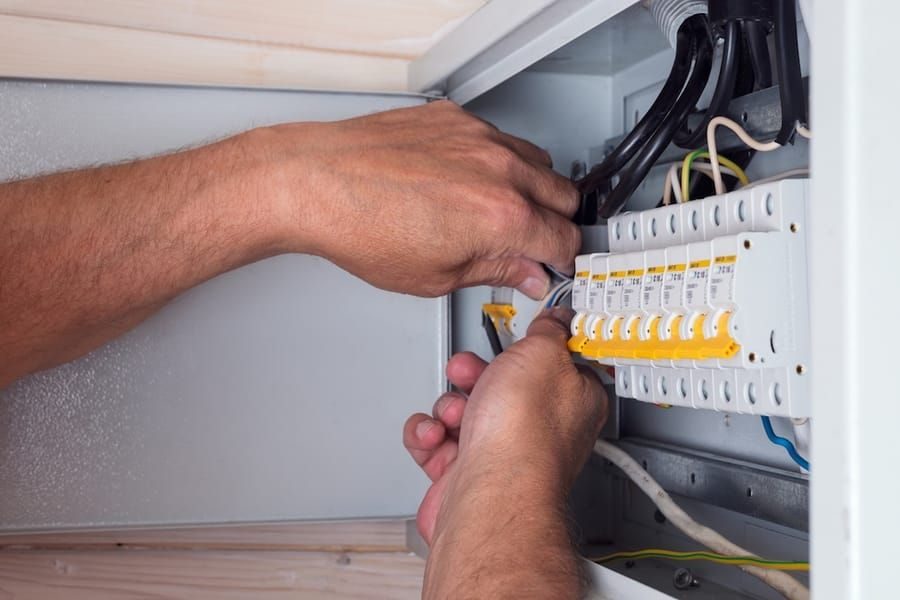
- Inspecting the electrical panel
- Identifying the service and panel configuration
- Checking available breaker space
- Confirming breaker compatibility
- Reviewing accessible grounding and bonding
- Selecting an appropriate surge protection device
- Installing the device and required circuit protection
- Routing conductors for effective performance
- Verifying normal indicator-light operation
- Labeling the installed equipment
- Explaining monitoring and replacement requirements
Surge protection depends on more than the device’s advertised capacity. The protector must be compatible with the electrical system and installed with attention to conductor length, routing, breaker placement, grounding, and manufacturer requirements.
Why Surge Protector Installation Details Matter
A surge protection device must respond rapidly and provide an effective path for excess voltage. Long, coiled, sharply bent, or poorly routed conductors add impedance and can reduce the protector’s ability to limit voltage effectively.
During installation, our electricians keep the connection appropriately routed and as direct as the panel configuration allows. We also confirm that the device is connected according to its listing and installation instructions.
Installing a surge protector does not correct:
- Loose or overheated panel connections
- Corroded electrical equipment
- Improperly matched breakers
- Damaged service conductors
- Inadequate grounding or bonding
- Obsolete or unreliable panels
- Improvised electrical modifications
- Insufficient service capacity
When the panel requires repair, replacement, or additional capacity, our electrical panel services address those conditions separately.
Type 1 and Type 2 Surge Protection Devices
Whole-home surge protection devices are commonly classified by where they can be installed within the electrical system. The correct option depends on the service equipment, panel configuration, and product specifications.
Type 1 Surge Protection
Type 1 devices are designed for approved installation on either side of the service disconnect. The exact placement and connection method depend on the product and the home’s electrical service.
Type 2 Surge Protection
Type 2 devices are installed on the load side of the service disconnect, commonly at the main distribution panel. Many residential whole-home surge protection systems use this configuration.
The type designation does not provide all the information needed to select a device. System voltage, voltage protection rating, nominal discharge current, short-circuit current rating, modes of protection, product listing, and panel compatibility must also be considered.
Understanding Surge Protection Ratings
Surge protector specifications can be difficult to compare because a larger number does not always mean more effective protection.
Important ratings may include:
- Voltage protection rating: Indicates the measured voltage the device allows through under specified test conditions. Lower ratings generally represent tighter voltage limiting when comparable products are evaluated.
- Nominal discharge current: Reflects the device’s ability to withstand standardized surge-current testing.
- Short-circuit current rating: Identifies the available fault current the device can withstand when installed as specified.
- Maximum continuous operating voltage: Describes the voltage the device can continuously tolerate without beginning surge-diversion operation.
- Modes of protection: Identifies which conductor combinations the device protects, such as line to neutral, line to ground, and neutral to ground.
These ratings should be reviewed together. Choosing a device based only on a large advertised surge-capacity number can overlook its voltage-limiting performance, electrical compatibility, and installation requirements.
Whole-Home Protection and Plug-In Surge Protectors
A panel-mounted surge protector and a plug-in surge protector serve different parts of a layered protection strategy.
Whole-home surge protection limits voltage at the electrical service before it travels farther through branch circuits. Point-of-use devices add another layer close to selected electronics.
Layered protection may include:
- Whole-home surge protection at the main panel
- Additional protection at a downstream panel when appropriate
- Listed plug-in protection for computers and televisions
- Protection for routers and home-office equipment
- Manufacturer-approved protection for specialty equipment
- Protection for communication, coaxial, or data lines
Electrical surges can enter through more than standard power conductors. Cable, telephone, antenna, and data connections may require their own compatible protective devices. A power-strip surge protector cannot protect equipment from a surge entering through an unprotected communication line.
Plug-in devices should not be daisy-chained or treated as substitutes for permanent wiring. They should be used according to their listings and replaced when their protection indicators show that they are no longer active.
Protecting Modern Equipment in Denver Homes
Residential electrical systems now support more electronically controlled equipment than homes used only a generation ago. Even equipment built around large motors or compressors may also contain sensitive circuit boards and communication modules.
Whole-home surge protection can help reduce surge exposure for:
- Furnaces and boilers
- Air conditioners and heat pumps
- Smart thermostats
- Refrigerators and freezers
- Ovens and induction cooking equipment
- Washing machines and dryers
- Dishwashers
- Electric and tankless water heaters
- Electric vehicle charging equipment
- Computers and home-office systems
- Televisions and entertainment equipment
- Security systems
- Smart-home controls
- Garage-door openers
The addition of a heat pump, EV charger, smart appliance, or high-efficiency HVAC system increases the value of the electronically controlled equipment connected to the home. Surge protection should be considered alongside the circuit, panel, and service work supporting those improvements.
Homeowners preparing for vehicle charging can learn more about our electric car charging installation services.
Surge Protection and Metro Denver Weather
Denver weather can change quickly. A clear afternoon can develop into a thunderstorm with lightning, hail, and high winds. Winter storms and strong wind events can also affect overhead lines, transformers, and neighborhood electrical service.
A home does not need to take a direct lightning strike to experience a surge. Lightning that contacts a nearby utility line, structure, transformer, or the ground can create voltage disturbances that travel through connected electrical systems.
No standard residential surge protection device can guarantee complete protection from every direct lightning strike. A severe event may exceed the device’s capacity or enter through an unprotected path. Whole-home surge protection is a meaningful layer of risk reduction, not a promise that electrical damage can never occur.
Power Outages and Service Restoration
The loss of power itself is not a surge. Electrical stress may occur during the event that caused the outage, during utility switching, or when service is restored.
After a major storm or electrical interruption, homeowners should check the status indicator on the whole-home surge protector. The home may continue receiving power even after the device’s protective components have been depleted.
Schedule an electrical evaluation if an outage or utility event is followed by:
- A failed surge-protection indicator
- New flickering or dimming
- Repeated breaker trips
- Electronics that no longer work correctly
- Burning odors or unusual electrical sounds
- Partial power loss
- Damaged receptacles or controls
- Failures affecting multiple appliances
Symptoms occurring across several circuits may indicate a service, neutral, panel, or utility problem rather than a failed surge protector alone.
Grounding and Bonding Support Surge Protection
A surge protection device needs an effective path for diverted current. Grounding and bonding problems can reduce protection and may indicate broader electrical safety concerns.
Grounding and bonding serve related but different functions. Bonding connects conductive components to establish an effective fault-current path. Grounding connects the electrical system to earth under defined conditions. Surge protection must be installed as part of this complete electrical system.
A larger surge protector cannot compensate for loose connections, improper bonding, damaged grounding-electrode conductors, or unsuitable service equipment. We review accessible grounding and bonding conditions before completing the installation.
If the home has not received a broader system evaluation, our electrical safety inspection services can assess the panel, accessible wiring, grounding, devices, and circuit protection.
Surge Protection for Older Denver-Area Homes
Many established Denver neighborhoods contain homes built before modern households depended on extensive electronic equipment. Those properties may also have panels, subpanels, branch circuits, and additions installed during different periods.
Before installing whole-home surge protection in an older home, we consider:
- Panel age and manufacturer
- Breaker compatibility
- Available panel space
- Electrical service configuration
- Grounding and bonding
- Previous electrical modifications
- Subpanels and detached structures
- Signs of overheating or corrosion
- Planned electrical upgrades
- The location of sensitive equipment
An older home does not automatically need a complete panel replacement before surge protection can be installed. The equipment must be inspected to determine whether it remains serviceable and can accept the device safely.
Surge Protection for New Panels and Electrical Upgrades
Panel replacement and service upgrades provide a practical opportunity to coordinate surge protection with the new electrical equipment. The electrician can select compatible components, plan device placement, and integrate the protector into the completed installation.
Whole-home surge protection should also be considered when adding:
- Electric vehicle charging
- A heat pump or new air conditioner
- Electric water heating
- Major kitchen appliances
- A hot tub or spa
- A finished basement
- A home office
- Smart-home equipment
- A workshop
- Solar or battery-storage equipment
Adding high-demand equipment does not automatically create a surge problem. It does increase the amount and value of electronically controlled equipment connected to the home.
How to Tell Whether a Surge Protector Is Working
Many whole-home surge protectors include one or more indicator lights. Their exact meanings vary by manufacturer, so homeowners should follow the labeling and instructions for the installed device.
A dark, red, or otherwise abnormal indicator may mean the device has lost protection on one or more modes. In many designs, the protector must be replaced after its internal protective components have been depleted.
The status indicator should be checked:
- After a severe Denver thunderstorm
- After nearby lightning activity
- After a major power interruption
- When connected equipment is unexpectedly damaged
- During routine electrical service
- At the interval recommended by the manufacturer
Do not remove the electrical panel cover to inspect a device mounted inside energized equipment. If the indicator is unclear or inaccessible, have a licensed electrician evaluate it.
Our Whole-Home Surge Protection Installation Process
Our installation process is based on the home’s electrical system rather than a one-device-fits-all recommendation.
1. Inspect the Panel and Service
We identify the service and panel configuration, available breaker space, compatible equipment, accessible grounding and bonding, and any conditions that could affect installation.
2. Select the Surge Protection Device
The device is selected according to the system voltage, installation type, panel compatibility, electrical ratings, and manufacturer requirements.
3. Plan Device Placement
We determine where the protector and connecting conductors can be installed to support a direct, properly protected connection.
4. Complete the Installation
The surge protector, circuit protection, conductors, fittings, and labeling are installed according to the equipment listing and project requirements.
5. Verify Device Status
We restore power, confirm normal indicator operation, and inspect the completed installation.
6. Explain Monitoring and Replacement
We show the homeowner where the status indicator is located, explain what normal operation looks like, and review when the device should be checked or replaced.
Professional Solutions That Put You First
We provide reliable, people-first service designed to meet your unique needs with care and professionalism. Our team is committed to delivering consistent results, clear communication, and dependable support you can trust. From start to finish, we focus on quality, responsiveness, and building lasting relationships through service delivered with heart.Protect Your Home with Professional Surge Protection
Protecting your home from electrical surges starts with proper installation at the panel. Heart Heating, Cooling, Plumbing & Electric installs whole-house surge protection devices designed to work with your Metro Denver or Colorado Springs home’s existing electrical system and meet current electrical code requirements.
If you’re ready to add surge protection to your home, call our team or schedule service online to have a licensed electrician evaluate your panel and install the appropriate protection device.

Special Offer
$250 Off
Electrical Panel UpgradeValid on 200-amp upgrades. Code-compliant installation.
Offer cannot be combined with any other promotions, discounts, or special offers. Terms and conditions may apply.
Expires: November 30, 2026
Expires: November 30, 2026
Send Us A Message
Frequently Asked Questions
Reliable, High-Quality Service You Deserve
what people are saying
Quality Service Backed by Real Reviews
Nariman Movaffagh
3 days ago

James was amazing and answered all my questions.
Hank Prichard
4 days ago
Very knowledgeable very professional. All my questions were answered Michael and David went above and beyond for me. Will definitely recommend them and Heart
Dino Rojas
4 days ago
Getting the pipe problem fixed
shahla hashemi
5 days ago
I’ll be regular costumer now on. Excellent experience with heart heating, ac, and electric.
Merlynn Bender
1 week ago
5 stars for Jeremiah Stephens on my sewer cleaning. Right guy for that job.
Eddie Huynh
1 week ago
Eli was great. He was fair and honest and made me feel comfortable. He explained everything really well and treated me with respect. Great employee and really honest
Susie Hranicka
1 week ago
Chris did a great job and was so kind, knowledgeable and professional! We have used Heart for hot water heater replacement, kitchen faucet replacement and other plumbing needs! It is a great company to do business with…we are always satisfied!!
Merlynn Bender
1 week ago
Jeremiah did great. On time, the right guy for this job. Thank you.
Dianne Montoya
1 week ago
We purchased our furnace from Heart a couple of years ago. I had regular maintenance done and they went above and beyond. Highly recommend.
Zachary Blackburn
1 week ago
We love being members of Heart. Today, Morgan came out for a fix on our leaky sink and also helped with a cloggy tub. He was extremely knowledgeable and efficient, and I'd have Morgan back out to our house any time!
E Beuler
1 week ago
Larry was as excellent as all their other technicians. He explained what he was connecting electrically. All personnel are terrific! Won’t ever think about using anyone else in the future. I feel very valued as a customer too!
Trenton Barrance serviced my furnace this year and I was equally impressed with his work and communication with me !
Trenton Barrance serviced my furnace this year and I was equally impressed with his work and communication with me !
Bernadette Dixon
1 week ago
Eli and Jeremiah,were AMAZING did such a great job I will definitely share my experience with them to all that are looking for plumbing issues.
Gordon Reichal
2 weeks ago
Professional service. A pleasure to deal with their focus on integrity and quality service.
Maury Kroopnick
2 weeks ago
Knowledgeable, educational, helpful,
quentin Lewis
2 weeks ago
Nick was methodical. Didn't rush into a diagnosis that probably would've cost more. He was awesome!!
Laura Bernstein
2 weeks ago
The team was great! I reached out when my furnace wouldn’t start and heard back right away. They got Joel out to my house within an hour. He took apart the furnace and confirmed that unfortunately it was toast, but got me set up with a quote for what I really wanted, which was a whole new Heat pump system. Victor and Joel got the old furnace out and Nick and the install team got the new one in place with the heat pump. It was a long, late day for the team, but I finally am heating my house again.
Carla Beckman
2 weeks ago
Thanks for sending Joel Ramirez to get my furnace running. Joel is professional, competent, pleasant, efficient.
James Rush
2 weeks ago
Eli did a wonderful job that was one thing after another. He was professional and courteous and did his job well.
Get In Touch With Heart Heating, Cooling, Plumbing, Electric
Full Service Home Comfort
Heating, cooling, plumbing, and electrical services come together to support comfort, safety, and reliability throughout your home. From routine care to repairs and system upgrades, each service is handled with attention to detail and a focus on long term performance. Trusted solutions help keep everything running smoothly through every season.