FREE Dispatch Fee on Any Drain Call



Indoor air quality in Metro Denver is influenced by more than household dust. Wildfire smoke can travel into the region from fires across Colorado and the western United States. Front Range ozone and fine-particle pollution can build during certain weather patterns, while dry air, seasonal pollen, windblown dust, pet dander, and contaminants from everyday household activities accumulate indoors.
Heart Heating, Cooling, Plumbing & Electric provides indoor air quality services designed around Denver-area homes and the HVAC systems that move air through them. We evaluate filtration, airflow, humidity, purification equipment, and the concerns you are experiencing before recommending a solution.
A home that feels dusty, dry, stale, or irritating does not necessarily need every available air quality product. It needs equipment selected for the contaminants and comfort problems actually present.
Indoor Air Quality Challenges in Metro Denver
Outdoor conditions affect indoor air whenever contaminants enter through doors, windows, ventilation openings, duct leakage, and small gaps in the building envelope. Once inside, particles and other pollutants may continue circulating as the heating or cooling system runs.
Common Denver-area indoor air quality concerns include:
- Fine particles from wildfire smoke
- Front Range dust and outdoor particulate pollution
- Dry indoor air during the heating season
- Tree, grass, and weed pollen
- Pet dander and tracked-in soil
- Dust from construction and home renovations
- Cooking particles and household odors
- Airborne particles from fireplaces and candles
- Contaminants entering from attached garages
- Uneven airflow and stagnant rooms
- Dirty or poorly fitted HVAC filters
The right response depends on the issue. Particle filtration may be important for smoke and dust, while dry winter conditions require humidity control. Odors and certain biological concerns may call for a different approach. No single indoor air quality product addresses every contaminant.
Wildfire Smoke and Fine Particles Inside the Home
Wildfire smoke can affect Metro Denver even when the nearest active fire is many miles away. The smallest smoke particles can enter a home through outdoor-air pathways and remain suspended indoors. Opening doors and windows, running exhaust equipment, and leakage around the building envelope can all contribute to infiltration.
A standard one-inch HVAC filter may capture larger household particles without providing the level of filtration desired during a smoke event. Upgrading filtration can help reduce recirculating particles, but the filter must be compatible with the system. A filter that creates too much resistance can reduce airflow, strain the blower, and interfere with heating or cooling performance.
We evaluate the filter cabinet, return-air capacity, blower performance, and duct configuration before recommending higher-efficiency filtration. The objective is to improve particle capture without creating an airflow problem elsewhere in the HVAC system.
Dry Air and Denver’s Elevation
Denver’s semi-arid climate and elevation contribute to persistently dry outdoor conditions. Indoor air can become even drier when the heating system operates for extended periods during winter. Low indoor humidity may contribute to dry skin, irritated nasal passages, static electricity, shrinking woodwork, and a home that feels uncomfortable even at a normal thermostat setting.
Humidity should be controlled rather than increased without limits. Excess moisture can condense on cold windows, exterior walls, or other surfaces and create conditions that support microbial growth. The appropriate setting depends on outdoor temperature, home construction, window performance, and how the building handles moisture.
Our whole-home humidifier services include system evaluation, installation, repair, and maintenance. Properly selected equipment adds moisture through the central HVAC system and allows more consistent control than portable units placed throughout the home.
Seasonal Pollen, Dust and Front Range Air
Spring tree pollen, summer grass pollen, late-season weeds, and windblown dust can all enter Denver-area homes. Landscaping, pets, open windows, nearby construction, and frequent movement through exterior doors can increase the amount of material brought indoors.
Temperature inversions and periods of poor outdoor air quality can also trap pollution along the Front Range. Closing the windows may reduce direct exposure, but particles already inside can continue circulating. Effective filtration depends on both the filter and how consistently air passes through it.
A whole-home approach may include improved filtration, sealing gaps around the filter rack, correcting return-air restrictions, and adjusting circulation settings. We evaluate those factors together rather than treating the filter rating as the only measure of performance.
Indoor Air Quality Services We Provide
Indoor air quality equipment should be matched to the home, the HVAC system, and the specific concern. Our services focus on filtration, air treatment, humidity control, and the airflow needed to support those components.
Whole-Home Air Filtration
Whole-home filtration treats air as it returns to the heating and cooling system. Depending on the equipment and available duct space, we may recommend:
- High-efficiency media filters
- Deeper filter cabinets with greater surface area
- Whole-home filtration systems
- Improvements to poorly sealed filter racks
- Filter configurations selected around available airflow
A higher filter rating is not automatically better for every system. We account for blower capacity, duct sizing, and existing static pressure so the filtration upgrade does not create weak airflow or equipment problems.
Air Purification Systems
Air purification equipment can supplement mechanical filtration when the home has concerns that filters alone may not fully address. Available solutions may include whole-home air purifiers, UV equipment, or other treatment systems installed within the HVAC system.
Different technologies address different types of contaminants. UV equipment is generally applied at specific points within the system and must be positioned correctly. Other purification technologies have their own operating requirements and limitations. We explain what the recommended equipment is designed to address and what it cannot reasonably be expected to remove.
Whole-Home Humidity Control
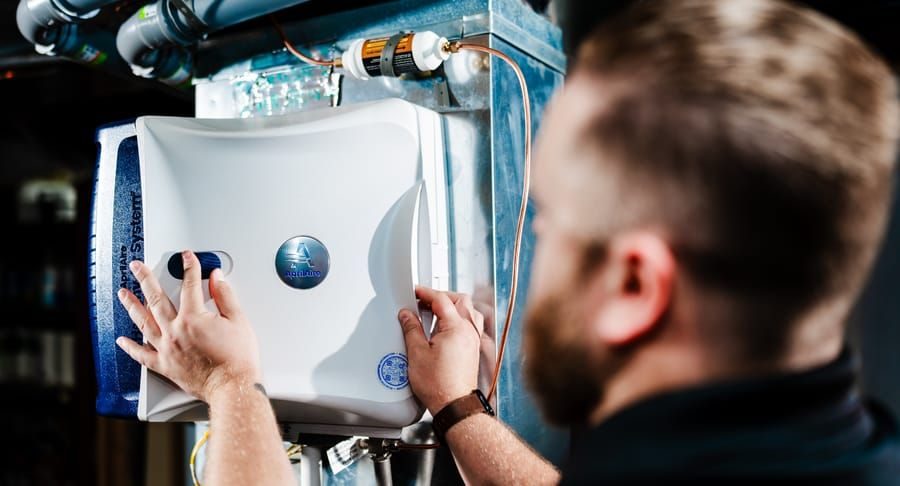
Whole-home humidifiers add controlled moisture during Denver’s dry heating season. The equipment must be properly sized, connected, drained, and controlled to avoid inadequate output or excessive humidity.
Humidity control works alongside the home’s heating system and should be inspected as part of seasonal service. Water panels, drains, valves, sensors, and controls require periodic attention to maintain dependable operation.
How We Evaluate Indoor Air Quality Concerns
Indoor air quality service begins with the home and its mechanical system, not a predetermined product. We consider what occupants are noticing, when the problem occurs, and how the HVAC system distributes air.
Our evaluation may include:
- Reviewing dust, smoke, odor, allergy, or dryness concerns
- Inspecting the existing filter and filter cabinet
- Checking supply and return airflow
- Looking for gaps around the filter rack
- Evaluating duct and equipment compatibility
- Reviewing thermostat and fan-circulation settings
- Inspecting existing purification or humidity equipment
- Identifying rooms with limited circulation
- Discussing seasonal and outdoor-air patterns
- Determining maintenance requirements for proposed equipment
This process helps us separate air quality concerns from temperature-control or mechanical problems. Excess dust may be related to an inadequate filter, but it can also involve duct leakage, renovation debris, poor housekeeping capture, or air bypassing the filter. A stagnant room may need an airflow correction rather than an air purifier.
Indoor Air Quality and HVAC Airflow
Filtration only works when air moves through the filter. If the system has undersized return ducts, a restrictive filter, a dirty blower, or an improperly configured fan, adding more equipment can make performance worse.
Airflow problems may cause:
- Weak air delivery from supply vents
- Uneven temperatures between rooms
- Longer heating or cooling cycles
- Increased system noise
- Filters that bow or pull out of position
- Premature blower wear
- Reduced filtration effectiveness
Because indoor air quality equipment becomes part of the heating and cooling system, we verify that the system can support it. If the air conditioner, furnace, or heat pump already has a performance problem, that issue should be addressed before relying on an IAQ accessory to improve comfort.
Our air conditioning services address cooling and airflow problems during Denver’s hotter months, while heating-system concerns are evaluated separately to protect the intended focus of each service.
Selecting the Right Filter for Wildfire Season
Homeowners often respond to visible smoke or poor outdoor air quality by installing the most restrictive filter they can find. While improved filtration may be appropriate, filter selection must account for the system’s ability to move air through it.
A deeper media filter may provide more surface area than a thin filter with a similar efficiency rating. The larger surface can support particle capture with less resistance, but the cabinet must fit the duct configuration and be installed without air bypass.
Filter replacement intervals can also change during wildfire events, renovation work, or periods of heavy dust. A filter that normally lasts several months may load more quickly when outdoor particle levels are elevated. We help homeowners understand the correct filter size, replacement schedule, and signs of excessive restriction.
Maintaining Indoor Air Quality Equipment
Filters, humidifiers, UV lamps, and purification systems require ongoing care. Neglected equipment can lose effectiveness, restrict airflow, leak, or stop operating without producing an obvious warning.
Maintenance needs may include:
- Replacing filters at appropriate intervals
- Inspecting media cabinets and seals
- Changing humidifier water panels
- Cleaning humidifier components
- Checking drains and water connections
- Replacing UV lamps according to equipment requirements
- Verifying electrical and control operation
- Confirming airflow after service
- Adjusting seasonal humidity settings
Indoor air quality equipment should be reviewed alongside regular heating and cooling maintenance. Eligible HVAC and IAQ components can be incorporated into the Heart Care Plan to support consistent service throughout the year.
Professional Solutions That Put You First
We provide reliable, people-first service designed to meet your unique needs with care and professionalism. Our team is committed to delivering consistent results, clear communication, and dependable support you can trust. From start to finish, we focus on quality, responsiveness, and building lasting relationships through service delivered with heart.Indoor Air Quality Solutions Built for Metro Denver
The best indoor air quality solution depends on the interaction between the home, its occupants, the HVAC system, and local conditions. Wildfire smoke calls for a different response than dry winter air. Seasonal pollen, persistent dust, odors, and stagnant rooms may each require different combinations of filtration, purification, humidity control, and airflow improvement.
Heart Heating, Cooling, Plumbing & Electric evaluates those conditions before recommending equipment. We install indoor air quality systems that are compatible with the home’s existing heating and cooling equipment and explain the maintenance required to keep them working properly.
Schedule indoor air quality service if your Denver-area home feels excessively dusty, dry, stale, or affected by smoke and seasonal airborne particles.

Special Offer
$750 Off
Complete HVAC System ReplacementValid on full system installs. Financing available.
Offer cannot be combined with any other promotions, discounts, or special offers. Terms and conditions may apply.
Expires: October 31, 2026
Expires: October 31, 2026
Send Us A Message
Frequently Asked Questions
Reliable, High-Quality Service You Deserve
what people are saying
Quality Service Backed by Real Reviews
Kenneth Zimmerman
19 hours ago

Trenton Barrance from Heart Heating Cooling Plumbing & Electric did an outstanding job evaluating our 21-year-old furnace to determine if there were any hazardous leaks or other problems requiring repair. Based on his analysis, we decided it was time for a new HVAC system. Trenton is very professional, knowledgeable, and experienced. He also told me about The Heart Care Plan that offers an amazing number of free or discounted services. I highly recommend having Trenton take care of all your HVAC needs!
Kristine
2 days ago
Had a good experience with David, Justin and Jon installing a new water heater. Clean, efficient, friendly and professional.
Tim Welch
2 days ago
David was very friendly and very knowledgeable of electric issues. He explained things very thoroughly.
Mike Milazzo
2 days ago
Daniel is an excellent plumber and technician. Very knowledgeable and professional. I highly recommend!
Bert Atkinson
2 days ago
Victor Zubia, Josh Oliva, and Jon Estes, the "dream team", from Heart Heating, Cooling, Plumbing, and Electric did an amazing job dismantling our old furnace and then installing our new one. They did all of this in 3 hours. All 3 gentlemen were kind and professional.
E. M. Atkinson
2 days ago
Nic Levea from Heart Heating and Cooling was wonderful to work with. He was professional and knowledgeable. He gave us options and didn't charge us for his time. We will definitely use this company again.
j m
2 days ago
Ben was great! Knowledgeable and efficient. Yet another great Heart employee.
Wayne Fox
2 days ago
Daniel did a fantastic job. He went above and beyond. We are looking forward to working with him on future projects.
Alex Harrison
3 days ago
David was great to work with. They fit us in quickly, explained things in an easy to understand way, and were done fast. We would recommend them to anyone and will be calling them if we need any other work done. Thanks!
Kenneth Zimmerman
4 days ago
Seth Taylor from Heart Heating Cooling Plumbing & Electric did an outstanding job servicing our water heater! He is very professional & knowledgeable, and took time to explain what he was doing and why. I highly recommend having Seth take care of all your needs! Ken Z.
Doug Welch
5 days ago
Omar and Michael did a thorough diagnostic check on my electrical system and made various recommendations for long term mitigation steps against future issues. They added an external surge protector to the breaker box that will work to protect our household against future electrical power surges.
Greschler Family
5 days ago
Joel Ramirez was very professional and took care of the issues extremely fast!
Kevin Simard
5 days ago
Justin A, Justin C, Ryan S, Richard S, thanks for the professional install of our hot water heater! Also Richard B for the Hvac maintenance. Top notch team!
Josh Kneeland
5 days ago
Ben did a great job following up on an inspection issue I have with my home furnace, thanks again!
Joe Urban
6 days ago
Very knowledgeable, professional, and thorough technician. Checked all components of my furnace very rapidly. Had all the equipment and equipment
Steve Bayens
6 days ago
Jason Jagger and apprentice Cole gave fast and effective drain line cleaning. They were polite and professional. I highly recommend.
Josh Ding
6 days ago
Chris from Heart plumbing is highly knowledgeable and thorough during our annual inspection. His attention to detail and professionalism are much appreciated. Highly recommended!
lisa Majercik
6 days ago
Joel R was great . Walk me through the whole process.
Get In Touch With Heart Heating, Cooling, Plumbing, Electric
Full Service Home Comfort
Heating, cooling, plumbing, and electrical services come together to support comfort, safety, and reliability throughout your home. From routine care to repairs and system upgrades, each service is handled with attention to detail and a focus on long term performance. Trusted solutions help keep everything running smoothly through every season.