FREE Dispatch Fee on Any Drain Call


Circuit Breaker Installation and Replacement in Metro Denver


Heart Heating, Cooling, Plumbing & Electric provides circuit breaker installation, replacement, and troubleshooting throughout Metro Denver. Our licensed electricians determine whether the problem originates in the breaker, connected wiring, electrical load, appliance, or panel. We then install equipment that is correctly rated for the circuit and specifically approved for the electrical panel.
A circuit breaker is not a universal replacement part. Its manufacturer, model, amperage, voltage, interrupting rating, number of poles, wire compatibility, and protective functions must match the application.
Circuit Breaker Services for Denver-Area Homes
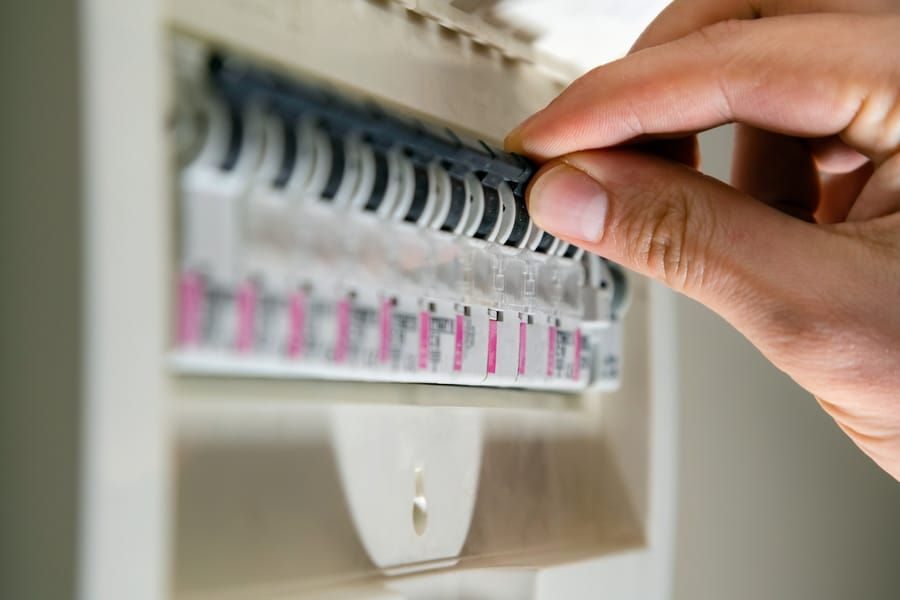
Circuit breaker work may involve replacing a failed device, adding protection for a new circuit, correcting incompatible equipment, or diagnosing a breaker that trips under normal use.
Our circuit breaker services include:
- Circuit breaker inspection and testing
- Circuit breaker replacement
- New circuit breaker installation
- Dedicated circuit installation
- Single-pole and double-pole breaker installation
- GFCI breaker installation
- AFCI breaker installation
- Dual-function breaker installation
- Breaker and panel compatibility evaluation
- Tripping-breaker diagnostics
- Loose or damaged breaker replacement
- Correction of improper breaker arrangements
- Circuit labeling and identification
- Load and panel-capacity evaluation
We do not assume that a tripping breaker is defective. Replacing a breaker without identifying why it tripped can leave an overload, short circuit, ground fault, damaged appliance, or wiring problem unresolved.
When a Circuit Breaker May Need Replacement
Circuit breakers can fail because of age, heat damage, mechanical wear, corrosion, electrical faults, improper installation, or incompatible equipment. Breaker replacement may be appropriate when testing confirms that the device itself is damaged or unreliable.
Signs that require professional evaluation include:
- A breaker will not remain reset
- The breaker trips with little or no connected load
- The breaker handle feels loose
- The breaker does not sit securely in the panel
- The breaker or nearby panel area feels unusually warm
- Buzzing, crackling, or sizzling comes from the panel
- Discoloration or melting is visible
- The breaker has sustained moisture or corrosion
- A breaker does not trip when a verified fault or overload condition requires it
- The installed breaker is not approved for the panel
- The breaker is incorrectly sized for the circuit conductors
- The circuit requires protective functions the existing breaker does not provide
Heat, smoke, arcing, or a burning odor at the panel requires prompt attention. Do not remove the panel cover or attempt to tighten internal components. Parts of the electrical service may remain energized even when the main breaker is turned off.
Why Circuit Breakers Trip
A breaker that trips is often performing its intended safety function. Resetting it repeatedly without identifying the cause can expose wiring and equipment to continued stress.
Common causes include:
- Too many devices operating on one circuit
- A high-demand appliance connected to an undersized circuit
- A short circuit
- A ground fault
- Damaged wiring
- Loose electrical connections
- Moisture in a device or connection
- A failing appliance
- Motor startup current
- A shared-neutral problem
- An incompatible dimmer, control, or electronic load
- A damaged or defective breaker
The timing of the trip provides useful information. A breaker that trips immediately may indicate a short circuit, ground fault, or severe equipment problem. A breaker that trips only after several appliances operate together may indicate an overload. Intermittent trips can require testing under the conditions that produce the problem.
Circuit Breaker Replacement
Breaker replacement begins with confirming what the existing breaker protects and whether its rating is appropriate for the wiring and connected load. The replacement must match the panel and circuit rather than merely fit into the available space.
Before replacing a breaker, we evaluate:
- Panel manufacturer and model
- Breaker type and listing
- Circuit voltage
- Conductor size and material
- Circuit load
- Number of poles
- Available fault current considerations
- Ground-fault or arc-fault protection requirements
- Signs of heat or damage at the panel connection
- Condition of the connected wiring
- The reason the original breaker failed or tripped
A larger breaker must never be installed simply to stop repeated tripping. Circuit conductors are protected according to their allowable current and application. Increasing breaker amperage without confirming the complete circuit can allow wiring to overheat before the breaker responds.
Adding a New Circuit Breaker
New equipment often requires its own branch circuit and breaker. Installing the breaker is only one part of that project. The wiring, disconnects, receptacles, equipment connections, grounding, and load calculation must also support the installation.
New circuit breaker installation may be needed for:
- Electric vehicle charging
- Heat pumps and air-conditioning equipment
- Electric water heating
- Kitchen appliances
- Induction or electric ranges
- Laundry equipment
- Hot tubs and spas
- Workshops and power tools
- Home offices
- Finished basements
- Garage equipment
- Outdoor electrical systems
- Additional lighting or receptacle circuits
Before adding a breaker, we determine whether the panel has an approved position for it and whether the electrical service can support the added load. An open space in the panel does not automatically mean usable electrical capacity is available.
For EV charging projects, we provide dedicated electric car charging installation that includes circuit, load, equipment, and charging requirements.
Dedicated Circuits
A dedicated circuit supplies one appliance or defined load rather than serving general-use devices throughout a room. Dedicated circuits may be required or recommended when equipment draws substantial current, operates continuously, uses a motor or compressor, or should not share power with other devices.
A dedicated circuit can help prevent:
- Overloading a general-use circuit
- Voltage drop when equipment starts
- Nuisance trips caused by combined loads
- Interference between sensitive devices
- Reliance on extension cords
- Improper use of adapters or power strips
The breaker, conductors, receptacle, disconnect, and equipment connection must be designed as one system. Installing a new breaker without suitable circuit wiring does not create a safe dedicated circuit.
AFCI, GFCI, and Dual-Function Breakers
Some circuits require protection beyond conventional overcurrent protection. The proper device depends on the circuit location, equipment, project scope, and electrical requirements applicable to the work.
GFCI Circuit Breakers
Ground-fault circuit interrupter protection responds to certain differences in current that can indicate electricity is traveling along an unintended path. It is commonly associated with areas where moisture increases shock risk.
A GFCI breaker can protect an entire branch circuit when that configuration is appropriate. It does not correct damaged wiring, water intrusion, or faulty equipment that causes the device to trip.
AFCI Circuit Breakers
Arc-fault circuit interrupter protection is designed to detect certain electrical arcing patterns that conventional breakers may not recognize. Arc faults can develop from damaged conductors, loose connections, deteriorated cords, or other electrical defects.
An AFCI breaker that trips repeatedly should be diagnosed. Replacing it with a standard breaker to prevent tripping removes the intended protective function without correcting the cause.
Dual-Function Breakers
Dual-function breakers combine AFCI and GFCI protection in one device. They may be used where both forms of protection apply and the panel is compatible with the equipment.
Protective breakers often require a neutral connection or specific panel configuration. Device selection and installation must follow the panel and breaker manufacturer’s requirements.
Breaker and Panel Compatibility
Circuit breakers that appear physically similar are not necessarily interchangeable. A breaker must be listed or classified for use with the specific panel in which it is installed.
Using an incompatible breaker can result in:
- Poor contact with the panel bus
- Loose installation
- Overheating
- Arcing
- Unreliable tripping
- Damage to the breaker or panel
- Failure to meet equipment requirements
We identify the panel and approved breaker family before installing a replacement. If compatible breakers are unavailable or the panel has broader performance concerns, replacing one breaker may not provide a dependable solution.
Tandem Breakers and Available Panel Space
A tandem breaker places two circuit poles into one panel position. Tandem breakers are not permitted in every panel or in every location within a panel.
The panel labeling identifies whether tandem breakers are allowed and where they can be installed. Adding an unapproved tandem breaker to create space can overcrowd the equipment, conflict with the panel listing, or conceal the need for broader electrical improvements.
Even when a tandem breaker is permitted, it does not increase the electrical service capacity. It only changes how approved branch circuits occupy panel space.
Shared Neutrals and Multiwire Branch Circuits
Some older and remodeled Denver homes contain multiwire branch circuits in which two energized conductors share a neutral. These circuits require correct phasing and a suitable means of simultaneous disconnection.
Improper breaker placement can place both conductors on the same phase, overload the shared neutral, or allow part of the circuit to remain energized while someone believes it is shut off. Handle ties or common-trip breakers may be required depending on the circuit.
This is one reason breakers should not be moved, rearranged, or replaced without understanding the wiring they control.
Double-Tapped Breakers
A double-tapped breaker has more than one conductor connected to a terminal designed for a single conductor. This condition is often discovered during electrical inspections, home sales, or panel work.
The appropriate correction depends on the breaker, conductors, circuit arrangement, and available panel space. Possible solutions may include:
- Moving a conductor to an approved breaker
- Installing an appropriate splice and pigtail
- Using a breaker specifically listed for multiple conductors
- Adding an approved circuit position
- Correcting broader panel modifications
Installing a different breaker is not automatically the right correction. The connected loads and circuit design must be reviewed first.
Circuit Breaker Problems in Older Denver Homes
Older Denver properties often contain electrical systems that have been modified during kitchen renovations, basement finishes, additions, and appliance upgrades. The panel may contain original circuits alongside newer breakers and wiring installed decades later.
We commonly evaluate conditions such as:
- Breakers from different or incompatible product families
- Unlabeled or inaccurately labeled circuits
- Overloaded general-use circuits
- Added basement or garage loads
- Shared-neutral wiring
- Improper tandem breakers
- Double-tapped terminals
- Breakers larger than the circuit wiring supports
- Abandoned wiring
- Limited panel space
- Older panels with unavailable replacement components
Age alone does not establish that a breaker or panel must be replaced. The equipment’s manufacturer, condition, compatibility, loading, installation, and service history all matter.
Circuit Breakers for Denver Home Electrification
Denver-area homeowners are adding heat pumps, electric water heaters, induction cooking, vehicle charging, hot tubs, and other high-demand equipment. These projects can require new breakers and circuits, but they can also change the calculated load on the electrical service.
Before adding equipment, we evaluate:
- Existing service capacity
- Panel rating
- Main breaker size
- Current connected loads
- Available breaker positions
- Feeder and conductor capacity
- Equipment specifications
- Continuous-load requirements
- Future electrical plans
A new subpanel can provide additional circuit positions but does not increase the total utility-service capacity. When the existing system cannot support the planned load, the appropriate solution may involve an electrical panel upgrade rather than simply adding another breaker.
Circuit Breaker Replacement vs. Electrical Panel Service
A single breaker replacement may be appropriate when:
- The breaker itself is defective
- Panel contact surfaces remain in good condition
- Compatible replacement equipment is available
- The circuit wiring is properly sized
- The problem is limited to one position or device
- The panel remains serviceable
Broader panel service may be needed when:
- Several breaker positions show heat damage
- The panel bus is burned or deteriorated
- Corrosion or water damage is present
- Breakers do not remain secure
- Compatible components are unavailable
- The panel contains widespread improper modifications
- The enclosure is damaged
- The panel lacks capacity for planned loads
- The equipment has recognized performance concerns
This distinction keeps circuit breaker service focused on the affected circuit without treating every breaker problem as a reason to replace the entire panel.
What to Do When a Breaker Trips
If a breaker trips once, turn off or unplug equipment on the affected circuit before attempting one reset. A tripped breaker may rest between its on and off positions and typically must be moved fully off before being reset.
Do not continue resetting the breaker if:
- It trips again immediately
- You smell burning material
- The panel is warm or noisy
- Smoke or sparking is present
- Water may have reached electrical equipment
- The breaker will not move normally
- Power remains unreliable after reset
Do not hold a breaker in the on position or replace it with a higher-amperage device. Repeated tripping is evidence that the circuit or equipment requires diagnosis.
Our Circuit Breaker Installation Process
Our electricians evaluate the circuit before deciding that breaker installation or replacement is the correct repair.
1. Identify the Affected Circuit
We determine which lights, receptacles, appliances, or equipment are supplied by the breaker and review the conditions that cause the problem.
2. Inspect the Panel and Breaker
We identify the panel, verify breaker compatibility, and check for heat, corrosion, looseness, physical damage, and improper modifications.
3. Evaluate the Circuit
Depending on the issue, we may assess connected loads, conductor size, voltage, continuity, grounding, neutral conditions, and equipment operation.
4. Determine the Correct Breaker
We select the appropriate manufacturer, breaker family, amperage, voltage, number of poles, interrupting rating, and protective functions.
5. Install the Breaker
The new breaker is installed in an approved panel position and connected according to the circuit and equipment requirements.
6. Test Operation
We restore power, test the circuit, verify normal breaker operation, and confirm that the original problem has been addressed.
7. Label and Explain the Work
We update circuit identification when necessary and explain what caused the issue, what was replaced, and whether additional electrical work should be planned.
Professional Solutions That Put You First
We provide reliable, people-first service designed to meet your unique needs with care and professionalism. Our team is committed to delivering consistent results, clear communication, and dependable support you can trust. From start to finish, we focus on quality, responsiveness, and building lasting relationships through service delivered with heart.Schedule Circuit Breaker Service in Metro Denver
Circuit breaker installation should begin with a diagnosis, not a guess. The correct breaker must match the panel, circuit wiring, voltage, connected load, and required protective functions.
Heart Heating, Cooling, Plumbing & Electric provides circuit breaker installation, replacement, and troubleshooting throughout Metro Denver. We determine whether the issue is limited to the breaker or connected to a larger circuit or panel condition, then explain the appropriate repair.
Schedule circuit breaker service today, or explore our complete electrical services for help with inspections, wiring, panels, and electrical improvements.

Special Offer
$250 Off
Electrical Panel UpgradeValid on 200-amp upgrades. Code-compliant installation.
Offer cannot be combined with any other promotions, discounts, or special offers. Terms and conditions may apply.
Expires: November 30, 2026
Expires: November 30, 2026
Send Us A Message
Frequently Asked Questions
Reliable, High-Quality Service You Deserve
what people are saying
Quality Service Backed by Real Reviews
Nariman Movaffagh
3 days ago

James was amazing and answered all my questions.
Hank Prichard
4 days ago
Very knowledgeable very professional. All my questions were answered Michael and David went above and beyond for me. Will definitely recommend them and Heart
Dino Rojas
4 days ago
Getting the pipe problem fixed
shahla hashemi
5 days ago
I’ll be regular costumer now on. Excellent experience with heart heating, ac, and electric.
Merlynn Bender
1 week ago
5 stars for Jeremiah Stephens on my sewer cleaning. Right guy for that job.
Eddie Huynh
1 week ago
Eli was great. He was fair and honest and made me feel comfortable. He explained everything really well and treated me with respect. Great employee and really honest
Susie Hranicka
1 week ago
Chris did a great job and was so kind, knowledgeable and professional! We have used Heart for hot water heater replacement, kitchen faucet replacement and other plumbing needs! It is a great company to do business with…we are always satisfied!!
Merlynn Bender
1 week ago
Jeremiah did great. On time, the right guy for this job. Thank you.
Dianne Montoya
1 week ago
We purchased our furnace from Heart a couple of years ago. I had regular maintenance done and they went above and beyond. Highly recommend.
Zachary Blackburn
1 week ago
We love being members of Heart. Today, Morgan came out for a fix on our leaky sink and also helped with a cloggy tub. He was extremely knowledgeable and efficient, and I'd have Morgan back out to our house any time!
E Beuler
1 week ago
Larry was as excellent as all their other technicians. He explained what he was connecting electrically. All personnel are terrific! Won’t ever think about using anyone else in the future. I feel very valued as a customer too!
Trenton Barrance serviced my furnace this year and I was equally impressed with his work and communication with me !
Trenton Barrance serviced my furnace this year and I was equally impressed with his work and communication with me !
Bernadette Dixon
1 week ago
Eli and Jeremiah,were AMAZING did such a great job I will definitely share my experience with them to all that are looking for plumbing issues.
Gordon Reichal
2 weeks ago
Professional service. A pleasure to deal with their focus on integrity and quality service.
Maury Kroopnick
2 weeks ago
Knowledgeable, educational, helpful,
quentin Lewis
2 weeks ago
Nick was methodical. Didn't rush into a diagnosis that probably would've cost more. He was awesome!!
Laura Bernstein
2 weeks ago
The team was great! I reached out when my furnace wouldn’t start and heard back right away. They got Joel out to my house within an hour. He took apart the furnace and confirmed that unfortunately it was toast, but got me set up with a quote for what I really wanted, which was a whole new Heat pump system. Victor and Joel got the old furnace out and Nick and the install team got the new one in place with the heat pump. It was a long, late day for the team, but I finally am heating my house again.
Carla Beckman
2 weeks ago
Thanks for sending Joel Ramirez to get my furnace running. Joel is professional, competent, pleasant, efficient.
James Rush
2 weeks ago
Eli did a wonderful job that was one thing after another. He was professional and courteous and did his job well.
Get In Touch With Heart Heating, Cooling, Plumbing, Electric
Full Service Home Comfort
Heating, cooling, plumbing, and electrical services come together to support comfort, safety, and reliability throughout your home. From routine care to repairs and system upgrades, each service is handled with attention to detail and a focus on long term performance. Trusted solutions help keep everything running smoothly through every season.