FREE Dispatch Fee on Any Drain Call



A heat pump has to do more than produce warm or cool air. In Metro Denver, it must respond to large temperature swings, intense afternoon sun, cold overnight conditions, dry air, snow, and long periods of summer operation. The equipment must also be correctly matched to the home, its ductwork, and the way the household uses each space.
Heart Heating, Cooling, Plumbing & Electric provides complete heat pump services throughout the Denver metro area. We repair existing equipment, replace aging systems, install heat pumps for new applications, and perform the maintenance needed to keep these year-round systems operating reliably. Our technicians work on both ducted and ductless heat pump systems, including all-electric and dual-fuel configurations.
Whether your heat pump has stopped heating, struggles during extreme weather, or is approaching the end of its service life, we can evaluate the complete system and explain the available options. Schedule heat pump service with our team for a solution based on the actual needs of your home.
Heat Pump Service for Denver-Area Homes
Heat pumps transfer heat rather than creating it through combustion. During the summer, the system removes heat from the home much like a central air conditioner. During the winter, it reverses operation and brings usable heat indoors. Because the same equipment operates during both heating and cooling seasons, proper sizing, setup, and maintenance are especially important.
Our heat pump service includes:
- Heat pump repair and system diagnostics
- New heat pump installation
- Heat pump replacement
- Preventive heat pump maintenance
- Ducted and ductless system service
- Cold-climate heat pump solutions
- Dual-fuel heat pump and furnace configurations
- Thermostat and control troubleshooting
- Airflow and ductwork evaluation
- Refrigerant, electrical, and defrost-system service
We look beyond the immediate symptom to determine how the outdoor unit, indoor coil, air handler or furnace, thermostat, ductwork, and electrical components are working together. That complete-system approach helps us address performance problems that a simple part replacement may not solve.
Heat Pump Repair in Metro Denver
A heat pump can continue running even when it is no longer heating or cooling effectively. Homeowners may first notice longer cycles, rising electricity use, uneven temperatures, or a system that seems unable to catch up during colder nights. These symptoms can stem from airflow restrictions, refrigerant issues, failing electrical components, sensor problems, improper control settings, or wear within the outdoor unit.
Our technicians provide heat pump repair for problems such as:
- The system runs but does not heat or cool adequately
- The outdoor unit does not start
- The heat pump turns on and off too frequently
- The system runs almost continuously
- Airflow is weak or uneven between rooms
- The outdoor unit develops excessive ice
- Auxiliary heat operates more often than expected
- The system becomes unusually loud
- The thermostat does not switch modes correctly
- The heat pump trips a breaker or loses power
- Heating or cooling costs increase unexpectedly
A layer of frost on the outdoor coil can be normal during winter operation. The system should periodically enter a defrost cycle to clear it. Heavy ice that remains on the coil, ice that returns immediately, or a unit that cannot complete defrost can indicate a control, sensor, refrigerant, fan, or drainage problem. Shutting down the system and scheduling service can help prevent additional damage.
Diagnosing Heat Pump Performance Problems
Heat pump troubleshooting should account for the conditions under which the problem occurs. A unit that struggles only during a sharp overnight temperature drop may have a different issue than one that performs poorly throughout the day. We assess how the system responds under load instead of relying only on whether it turns on.
Depending on the symptoms, our heat pump diagnostics may include checking:
- Supply and return air temperatures
- System airflow and static pressure
- Filter, blower, coil, and duct conditions
- Refrigerant pressures and temperatures
- Compressor and fan operation
- Capacitors, contactors, wiring, and electrical connections
- Reversing valve operation
- Defrost sensors, controls, and cycle performance
- Thermostat configuration and staging
- Auxiliary or backup heat operation
- Condensate drainage
- Outdoor-unit clearance and coil condition
This process helps distinguish a repairable equipment problem from an installation, airflow, control, or system-sizing issue. We explain what we find and provide options based on the equipment’s condition, age, repair history, and expected performance.
Heat Pump Installation Designed for Metro Denver
Installing a heat pump is not a matter of replacing one outdoor unit with another of similar physical size. The equipment must be selected around the home’s heating and cooling load, the system configuration, available electrical capacity, and the temperatures it will encounter across the Front Range.
When we install a heat pump, we consider factors such as:
- The home’s square footage, insulation, air leakage, and window exposure
- Solar heat gain from Colorado’s strong sunlight
- Existing duct sizing, condition, and airflow capacity
- The equipment’s heating output at lower outdoor temperatures
- Whether the home will use an all-electric or dual-fuel system
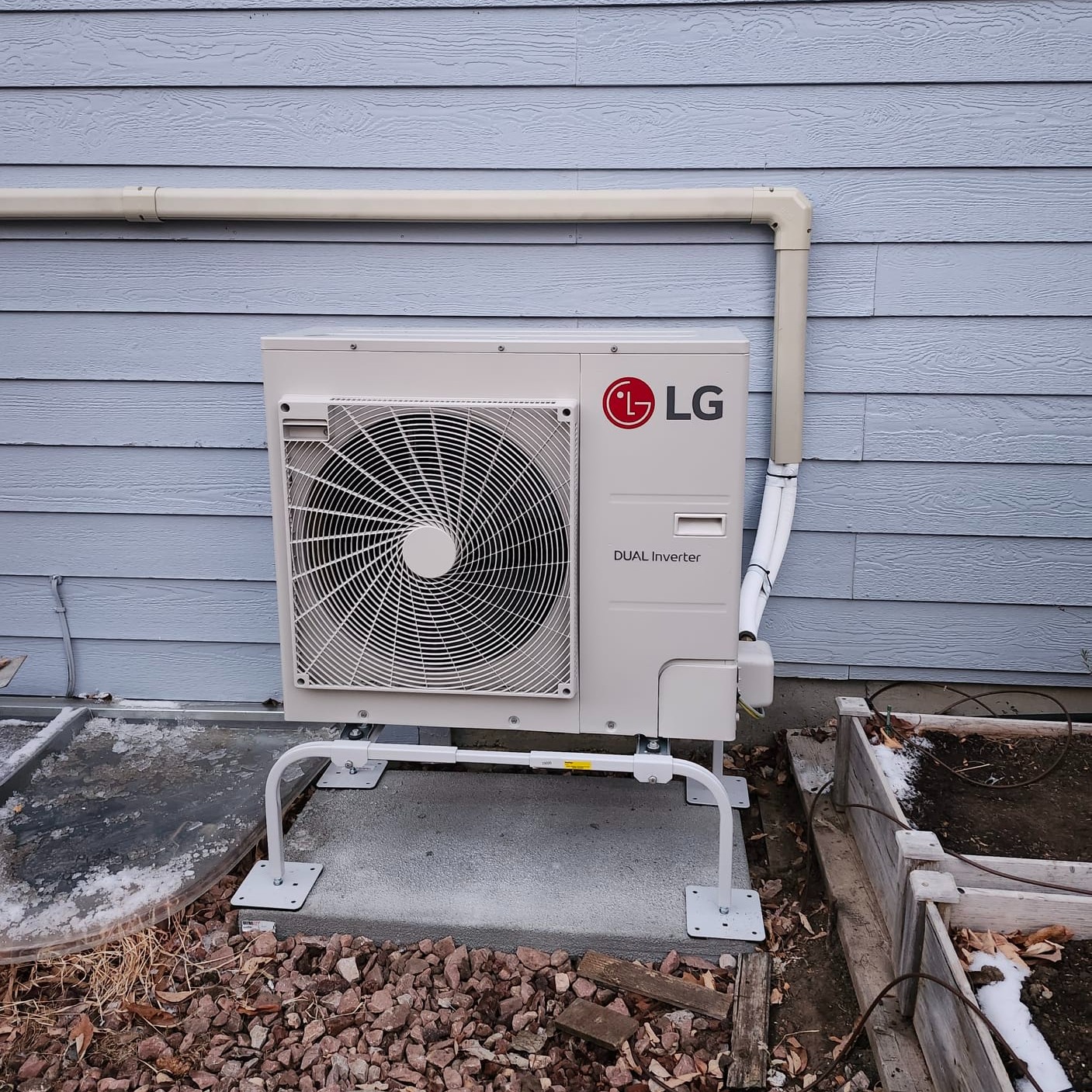
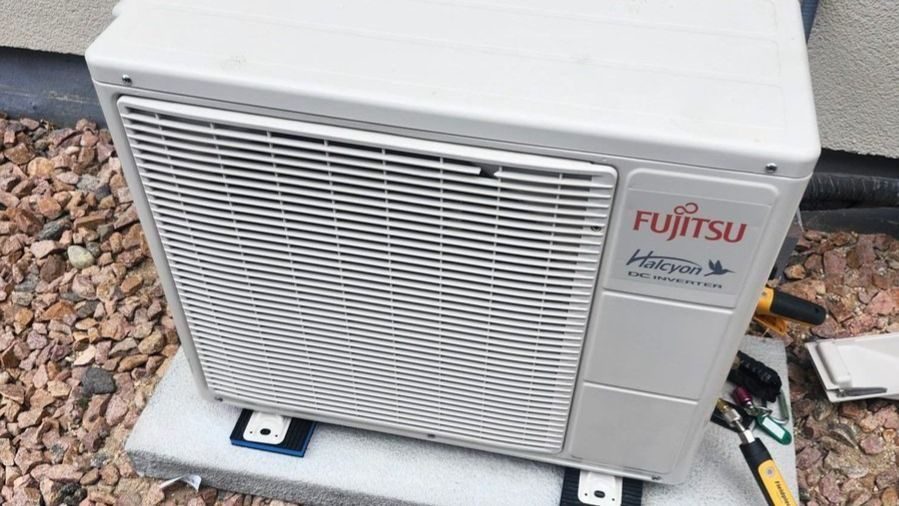
- The placement and protection of the outdoor unit
- Electrical panel and circuit requirements
- Thermostat compatibility and staging
- Condensate and defrost-water management
- Comfort differences between levels, additions, and finished basements
Older Denver-area homes may have ductwork that was designed around a furnace rather than the airflow requirements of a modern heat pump. Some homes have additions, converted spaces, or upper floors that never received balanced air distribution. Newer homes can present different concerns, including tightly sealed construction, multiple comfort zones, and higher expectations for consistent temperature control.
Before recommending equipment, we evaluate how the home is currently performing. Correcting a duct restriction, return-air shortage, or control problem during installation can make as much difference as the efficiency rating of the new heat pump itself.
Choosing the Right Heat Pump System
The right heat pump depends on the home, existing equipment, ductwork, and expected performance during Denver’s temperature extremes.
Ducted Air-Source Heat Pumps
Ducted heat pumps provide whole-home heating and air conditioning. Variable-speed systems adjust their output as conditions change, supporting steadier temperatures, quieter operation, and efficient performance.
Dual-Fuel Heat Pump Systems
A dual-fuel system pairs a heat pump with a gas furnace. The heat pump handles cooling and moderate heating, while the furnace can take over during colder weather. Correct controls and balance-point settings allow both systems to work efficiently. Learn more about our furnace services.
Ductless Heat Pumps
Ductless heat pumps condition individual rooms or zones without conventional ductwork. They are often used for additions, converted spaces, finished upper levels, and rooms with persistent comfort problems. Proper sizing and indoor-unit placement remain essential. We provide ductless mini-split services for these applications.
Heat Pump Replacement
Heat pump replacement may become more practical when an older system requires frequent repairs, uses outdated components, or can no longer maintain comfortable temperatures efficiently. Replacement is also an opportunity to correct problems that affected the original system, including poor sizing, inadequate airflow, limited staging, or an improperly configured backup heat source.
We may recommend comparing repair and replacement when:
- The heat pump has experienced repeated compressor or refrigerant problems
- Major components are failing near the end of the system’s expected service life
- Repair costs are becoming difficult to justify
- The system cannot maintain comfort despite being operational
- Electric resistance backup heat runs excessively
- Replacement parts are difficult to obtain
- The home has undergone additions or efficiency improvements
- The existing system was not sized or installed correctly
- The homeowner wants to replace separate heating and cooling equipment with one system
Our team evaluates the condition of the outdoor unit, indoor equipment, refrigerant lines, ductwork, thermostat, and electrical supply. We then explain whether a targeted repair, a partial system change, or a complete heat pump replacement is the more sensible long-term option.
What to Expect During Heat Pump Installation
A successful installation includes more than setting equipment and connecting refrigerant lines. The system must be commissioned and tested as a complete heating and cooling assembly.
Our installation process includes:
- Evaluating the home and existing HVAC system
- Determining the appropriate equipment capacity and configuration
- Reviewing ductwork, airflow, and return-air needs
- Confirming electrical and control requirements
- Removing old equipment when replacement is needed
- Installing the indoor and outdoor components
- Connecting and testing refrigerant, drain, electrical, and control systems
- Verifying airflow and temperature performance
- Configuring heating stages, defrost settings, and backup heat
- Testing operation in both heating and cooling modes
- Explaining thermostat use, filter care, and normal system operation
Before completing the work, we verify that the heat pump responds correctly to thermostat commands and that the indoor and outdoor components communicate as intended. We also explain what the homeowner should expect from the system, including longer low-stage cycles, defrost operation, and the circumstances under which backup heat may run.
Heat Pump Maintenance for Year-Round Operation
Unlike a furnace or air conditioner that has one primary season, a heat pump may operate during most of the year. That workload makes regular heat pump maintenance important for reliability, airflow, efficiency, and early problem detection.
Maintenance should account for both sides of system operation. A heat pump that cooled adequately in August is not automatically ready to heat effectively in January. Heating mode adds reversing-valve operation, defrost controls, outdoor-coil performance, and backup heat to the list of components that must work properly.
Professional heat pump maintenance may include:
- Inspecting and cleaning indoor and outdoor coils
- Checking filters and system airflow
- Testing electrical components and connections
- Checking refrigerant performance
- Inspecting the blower and fan motors
- Testing the reversing valve
- Verifying defrost operation
- Checking thermostat settings and staging
- Testing auxiliary or backup heat
- Inspecting condensate drainage
- Confirming safe clearances around the outdoor unit
- Measuring system temperatures and overall performance
Spring and fall service allows us to evaluate the heat pump before the highest cooling and heating demands arrive. Homeowners who want recurring system care can ask about our Heart Care Plan.
Heat Pumps and Denver’s Winter Weather
Modern heat pump systems can provide useful heating at temperatures well below freezing, but performance varies by model and system design. Equipment should be evaluated by how much heating capacity it retains as outdoor temperatures fall, not only by its general efficiency rating.
During colder conditions, a properly designed system may use a variable-speed compressor, staged operation, electric auxiliary heat, or a gas furnace to meet the home’s full heating demand. The correct approach depends on the equipment, building load, fuel availability, and the homeowner’s priorities.
Outdoor-unit placement also matters. The unit needs adequate airflow and clearance from snow accumulation, drifting, roof runoff, and obstructions. Defrost water must be able to drain and refreeze without creating a block of ice beneath the equipment. These details can significantly affect winter reliability.
Professional Solutions That Put You First
We provide reliable, people-first service designed to meet your unique needs with care and professionalism. Our team is committed to delivering consistent results, clear communication, and dependable support you can trust. From start to finish, we focus on quality, responsiveness, and building lasting relationships through service delivered with heart.Complete Heat Pump Care From a Local HVAC Team
Heat pump performance in Metro Denver depends on more than equipment specifications. The system must be selected, installed, and serviced with local temperature swings, winter operation, home construction, ductwork, and electrical requirements in mind.
Heart Heating, Cooling, Plumbing & Electric provides heat pump repair, replacement, installation, and maintenance as part of our complete HVAC services. We take the time to diagnose the full system, explain our findings, and recommend work that supports reliable heating and cooling throughout the year.
Schedule heat pump service today if your system is underperforming, needs seasonal maintenance, or is ready for replacement.

Special Offer
$39
HVAC Precision Tune-UpFull system inspection, safety check, and efficiency review.
Offer cannot be combined with any other promotions, discounts, or special offers. Terms and conditions may apply.
Expires: October 31, 2026
Expires: October 31, 2026
Send Us A Message
Frequently Asked Questions
Reliable, High-Quality Service You Deserve
what people are saying
Quality Service Backed by Real Reviews
Susan Maes
1 day ago

James was very informative.. Answered all our questions and explained everything
Randall Mann
2 days ago
Trenton Barrance did a yearly inspection on my furnace.
He performed a very through inspection and found all was running great.
Trenton was very polite and we had good conversations together.
I'm very pleased with his personality and his work.
I'm very pleased wth Hearth Heating .used them for years
Good company and good people.
Randy Mann
He performed a very through inspection and found all was running great.
Trenton was very polite and we had good conversations together.
I'm very pleased with his personality and his work.
I'm very pleased wth Hearth Heating .used them for years
Good company and good people.
Randy Mann
Steven Benoy
3 days ago
Some hero’s don’t wear capes. James flew into our last minute needs with kindness and skillz!
Simple from start to finish! If afraid of getting burned (or simply staying hot)…call Heart now!
Simple from start to finish! If afraid of getting burned (or simply staying hot)…call Heart now!
Reece Cantrell
4 days ago
Great people that know there products.
Daniel Gay
5 days ago
I called them for a potential water leak because my water bill was unusually high. Justin came to do an assessment and was very honest. Nothing was wrong other than extra daily usage based on the meter etc. I've had bad experiences in the past where auditors try to find something to fix and charge me for unnecessary work. This was not the case with Justin. We discussed some plumbing issues I've had in the past and sold me on getting the cheap subscription which sounds like a great deal. I'll call and set that up next spring when I'm predicting some work to be done on my furnace. I wasn't charged for the inspection. He never acted like it was a waste of his time and was friendly during the entire interaction.
Michael Shufelt
5 days ago
Nic was very professional, cordial. He explained what he was doing and why. He had to get a part that had failed and explained the reason behind the failures. He was respectful. We respect his work ethic, and will and ask for him again.
The Mannings
5 days ago
Trenton performed our annual furnace check up. This is the second year in a row he’s done this service. He’s thorough, professional, and a great communicator. We have trusted Heart with a number of installations in our home (HVAC, hot water heater) and their work is top quality, the products they sell are the best, and their service plan is exceptional.
sharon Lundstrom
5 days ago
Fan/light installed on 20 ft ceiling. Worker were prompt, friendly, efficient, accommodating, and cleaned up. Couldn't have asked for a better experience.
Carin Maher
6 days ago
James Gregory and Heart always do a great job!
Doug Smith
6 days ago
It is our first time using Heart. We’ve had Outstanding service from Daniel. He is conscientious and he explains things very well.
We are going to consider getting the flow tech. We’re leaning heavily in that direction and will make the decision by Monday, 10/12/26.
I don’t know what you’re paying, Daniel, but whatever it is, you’re lucky to have him.
We are going to consider getting the flow tech. We’re leaning heavily in that direction and will make the decision by Monday, 10/12/26.
I don’t know what you’re paying, Daniel, but whatever it is, you’re lucky to have him.
Joe Jenkins
6 days ago
Richard came by today to winterize my swamp cooler. He was quick, thorough, and efficient. I have an annual contract with Heart and it really pays off. I have always had great service from Heart, and Richard was awesome.
Jeffrey Skates
7 days ago
Service was Awsome. The technician was very friendly
Paul Gomez
1 week ago
Trent was awesome and very thorough while servicing our A/C and furnace.
Trent came back to make sure all the numbers were normal and was friendly the whole time. I'll request him in the future.
Ben Miller did a great job servicing our furnace. No complaints.
Trent came back to make sure all the numbers were normal and was friendly the whole time. I'll request him in the future.
Ben Miller did a great job servicing our furnace. No complaints.
Jahred Washington
1 week ago
Daniel C was professional, knowledgeable, and thorough. Highly recommend.
Lance Sommer
1 week ago
Jeremiah was great! Helped us identify a source of leakage underneath our sink and offered a reasonably priced solution which he installed within minutes.
Steven Caputo
1 week ago
David was excellent. Knowledgeable, friendly and conscientious. Work was done as they promised. So glad I chose Heart.
Kenneth Zimmerman
1 week ago
I highly recommend having Heart Heating, Cooling, Plumbing, & Electric take care of all your HVAC needs! Recently, Josh Oliva, Victor Zubia, Justin Anderson, and Jon Estes installed a totally new HVAC system consisting of a new heat pump, a new high-efficiency furnace, and a new evaporator coil to replace our faltering 21-year-old furnace & A/C. The cost was very reasonable and this team worked tirelessly to install it in one day! They also checked to see that our smoke and carbon monoxide detectors were installed & up-to-code! The team was VERY CLEAN & put carpet & wood floor protectors down where they were working! Heart HCP&E are exceptional!!
Kenneth Zimmerman
1 week ago
Trenton Barrance from Heart Heating Cooling Plumbing & Electric did an outstanding job evaluating our 21-year-old furnace to determine if there were any hazardous leaks or other problems requiring repair. Based on his analysis, we decided it was time for a new HVAC system. Trenton is very professional, knowledgeable, and experienced. He also told me about The Heart Care Plan that offers an amazing number of free or discounted services. I highly recommend having Trenton take care of all your HVAC needs!
Get In Touch With Heart Heating, Cooling, Plumbing, Electric
Full Service Home Comfort
Heating, cooling, plumbing, and electrical services come together to support comfort, safety, and reliability throughout your home. From routine care to repairs and system upgrades, each service is handled with attention to detail and a focus on long term performance. Trusted solutions help keep everything running smoothly through every season.