FREE Dispatch Fee on Any Drain Call


Plumbing Leak Detection Services in Metro Denver


Heart Heating, Cooling, Plumbing & Electric provides professional leak detection in Denver and throughout the surrounding metro area. We evaluate the plumbing system, isolate the affected section, and use noninvasive diagnostic methods when appropriate to narrow down the source. The objective is to locate the leak accurately enough to plan a focused repair without opening walls, ceilings, or floors based on guesswork.
Our plumbers understand how Denver-area housing, seasonal freezes, aging pipe materials, expansive soils, remodeled plumbing systems, and changing water pressure can influence where leaks develop. We use that local experience to interpret what the building is telling us and determine the most practical next step.
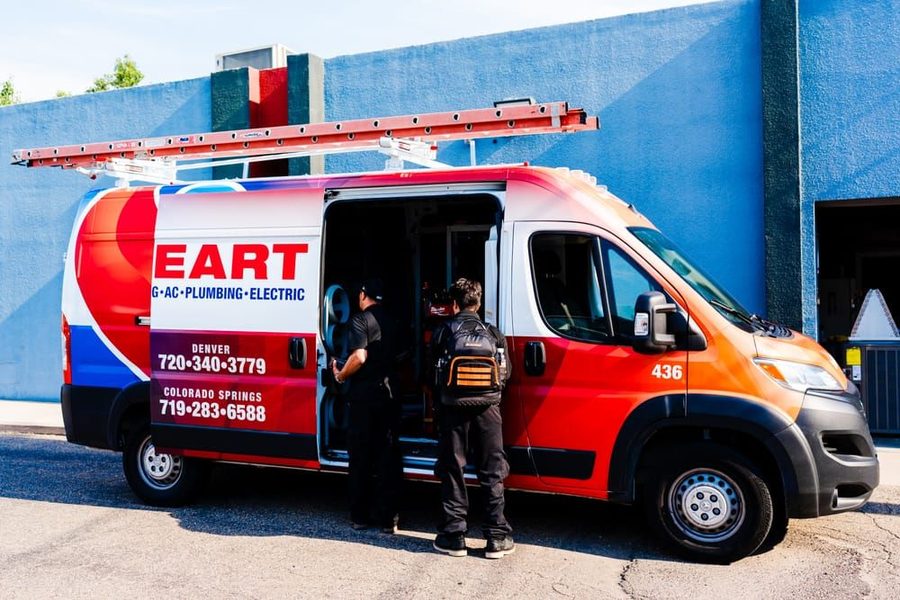
Signs Your Home May Have a Hidden Water Leak
Some leaks release enough water to create immediate damage. Others remain small for weeks or months while moisture spreads through building materials or water is lost underground. The absence of standing water does not necessarily mean the plumbing system is watertight.
Warning signs that may justify professional leak detection include:
- An unexplained increase in water use
- The sound of running or dripping water when fixtures are off
- Water-meter activity when the home is not using water
- Damp drywall, ceilings, cabinets, or flooring
- Paint that bubbles or peels without an obvious surface spill
- Flooring that warps, lifts, or changes color
- Warm areas on a slab or finished floor
- Musty odors in a wall, cabinet, or lower level
- Recurring moisture in the same location
- Reduced or fluctuating water pressure
- A water heater that appears to run more frequently
- Cracks or damp areas near the foundation
- Water collecting near the point where the service line enters the home
These symptoms help establish where to begin, but they do not always identify the leak itself. Water can follow framing, pipes, flooring seams, or gravity before becoming visible. A stain on a first-floor ceiling may originate from a bathroom fixture, a supply pipe, a drain connection, or water entering from another location.
Why Plumbing Leaks Develop in Denver-Area Homes
Metro Denver contains homes built across many periods, from older neighborhoods with generations of plumbing updates to newer construction with modern piping and tightly finished mechanical spaces. The age of the home provides context, but leaks can occur in any property when materials, installation conditions, pressure, temperature, or movement place stress on the system.
Aging and Mixed Pipe Materials
Older Denver homes may contain galvanized steel, copper, or sections of plumbing installed during different renovations. A system can include original piping, partial replacements, newer fixture connections, and transitions between materials.
Galvanized pipes can corrode internally and lose capacity over time. Copper may develop pinhole leaks, fail at fittings, or become damaged by movement and installation conditions. Newer piping is not immune to leaks when fittings are improperly secured, penetrated by fasteners, or stressed by poor support.
When repeated leaks indicate a broader piping problem, our pipe repair and repiping services address the damaged section or the larger system condition.
Freezing Temperatures and Rapid Weather Changes
Denver can move quickly between mild daytime conditions and freezing overnight temperatures. Pipes in exterior walls, crawlspaces, garages, unfinished areas, and other poorly protected locations face greater exposure during cold snaps.
A frozen pipe does not always split in a place that is immediately visible. Damage may remain concealed until the pipe thaws and pressure returns. Small cracks near fittings or weakened sections can then release water inside walls, ceilings, or lower levels.
Expansive Soil and Underground Line Movement
Soil conditions vary across Metro Denver, but areas with expansive clay can place stress on buried plumbing as moisture levels change. Soil movement, settlement, landscaping work, root activity, and deterioration at pipe joints can affect underground water lines.
A leak between the meter and the home may cause persistent water loss without creating an obvious indoor stain. Depending on the location and severity, homeowners may notice reduced pressure, unusually green vegetation, soft soil, or moisture near the foundation. Our water line services address underground supply-line repair and replacement after the affected section has been identified.
Water Pressure and Control Problems
Excessive or unstable water pressure can accelerate wear on supply lines, valves, appliance connections, and fixtures. A failing pressure-reducing valve, thermal expansion, or pressure changes within the system can contribute to recurring leaks.
Finding the visible leak without checking the conditions around it may lead to another failure elsewhere. When the evidence suggests a pressure problem, we evaluate whether the leak is isolated or part of a larger system issue.
Types of Plumbing Leaks We Locate
Leak detection is not a single test used for every plumbing problem. The location, pipe type, symptoms, and whether the leak involves a pressurized or drainage system determine how the investigation should proceed.
Concealed Supply-Pipe Leaks
Pressurized hot and cold water lines can leak behind walls, above ceilings, beneath floors, or inside cabinets. Because these lines remain under pressure, even a small opening can release water continuously.
We isolate fixtures and plumbing sections to determine whether the loss is occurring in the hot-water system, cold-water system, or a specific branch. That information helps narrow the search before any access point is considered.
Slab Leaks
A slab leak occurs in piping beneath or within a concrete foundation. Possible signs include warm flooring, dampness at the slab edge, unexplained water use, reduced pressure, or the sound of water when fixtures are off.
Locating a suspected slab leak requires careful isolation because surface moisture can travel away from the failure. Our dedicated slab leak detection services address the additional diagnostic and repair-planning considerations involved with below-slab piping.
Underground Water Service Leaks
The water service line carries water from the municipal connection toward the home. Leaks may develop from pipe deterioration, joint failure, freezing conditions, ground movement, root interference, or physical damage.
Because the affected pipe is buried, the visible surface condition may not correspond directly to the source. Water can move through soil, utility trenches, or disturbed backfill before appearing near the home.
Fixture and Connection Leaks
Toilets, faucets, sinks, showers, tubs, dishwashers, refrigerators, washing machines, and other connected equipment can lose water through seals, valves, hoses, supply connections, or drainage fittings.
These leaks may occur only while the fixture or appliance is operating. Reproducing the conditions under which the moisture appears is often necessary to distinguish a supply leak from a drainage or waterproofing problem. When the source is tied to a high-use household area, our kitchen plumbing services can address the fixture, faucet, sink, or appliance connection involved.
Water Heater and Hot-Water Leaks
Water near a water heater may originate from the tank, drain valve, temperature and pressure relief system, expansion tank, nearby piping, or another source in the mechanical area. The location of the puddle alone does not identify the failed component.
We inspect the connected plumbing and determine whether the issue requires a targeted repair or professional water heater service.
Drain and Wastewater Leaks
Drain leaks behave differently from pressurized supply leaks. They may release water only when a particular fixture drains, making the problem intermittent. Moisture can originate from a joint, trap, toilet seal, cracked drainpipe, or another part of the drainage system.
A plumbing camera can inspect the interior of an accessible drain or sewer line, but it does not replace water-line leak detection. Our camera inspection services are used when the evidence points to a problem within the drainage or sewer system.
How Professional Leak Detection Works
The most effective diagnostic process moves from broad system evidence toward the specific source. Testing everything at once without a clear sequence can create misleading results and unnecessary disruption.
1. Review the Symptoms and Leak History
We begin by discussing what you have noticed, when it occurs, and whether anything changed before the problem appeared. Useful details include recent freezing weather, remodeling, appliance use, previous repairs, pressure changes, and whether the moisture is constant or intermittent.
We also review the location and construction of the affected area. A finished basement ceiling, slab-on-grade floor, mechanical room, exterior wall, and upstairs bathroom each present different possible water paths.
2. Inspect Accessible Plumbing and Moisture Patterns
The plumber examines visible pipes, fixture connections, shutoff valves, appliance hoses, water-heating equipment, and nearby drainage components. Moisture staining, material swelling, corrosion, mineral deposits, and the direction of water travel can help establish where the problem begins.
The wettest visible area is not automatically the source. The inspection accounts for how water may have moved through framing, insulation, cabinets, flooring, or wall cavities.
3. Isolate the Plumbing System
Isolation testing helps determine which part of the plumbing system is losing water. Depending on the circumstances, that may involve confirming that fixtures are off, observing meter behavior, checking pressure, isolating hot and cold lines, or testing a specific branch.
This step is especially important in homes with more than one apparent problem. A dripping fixture and a concealed pipe leak can occur at the same time, but repairing the visible drip will not account for continued water loss elsewhere.
4. Apply the Appropriate Detection Method
No single tool identifies every leak. Depending on the pipe material, accessibility, temperature difference, and type of loss, our diagnostic methods may include:
- Acoustic listening equipment
- Thermal imaging
- Moisture meters
- Pressure testing
- Water-meter observations
- Fixture and branch isolation
- Visual inspection of accessible piping
- Targeted testing under operating conditions
Acoustic equipment can help identify sound produced by pressurized water escaping a pipe, but background noise, pipe depth, building materials, and soil conditions affect what can be heard. Thermal imaging can reveal temperature differences associated with some hot-water leaks or moisture patterns, but it does not allow a camera to see through a wall. Moisture meters help confirm where materials are wet, though they do not independently identify the failed pipe.
Professional leak detection depends on combining tool readings with plumbing-system knowledge. A device provides evidence; the plumber interprets what that evidence means.
5. Confirm the Most Likely Source
Before recommending access or repair, we compare the testing results with the home’s plumbing layout and the observed damage. When evidence supports a specific location, we explain where the leak is most likely occurring and what level of access may be needed.
Some concealed systems cannot be exposed without opening a finished surface. The purpose of leak detection is to make that access as informed and limited as reasonably possible, not to promise that every leak can be repaired without opening anything.
6. Develop the Repair Plan
Once the source has been narrowed down, we explain the repair options. The appropriate solution may involve replacing a fitting, repairing a pipe section, rerouting a line, correcting pressure, servicing an appliance connection, or addressing a larger piping problem.
We separate locating the leak from repairing the resulting finish damage. Plumbing work may stop the water loss, while drywall, flooring, cabinetry, mold remediation, or structural restoration may require another qualified provider.
Leak Detection Versus Leak Repair
Leak detection answers where the water is coming from and which part of the plumbing system is involved. Leak repair addresses the failed pipe, fitting, valve, fixture, or connected equipment.
Keeping those steps distinct protects the quality of the repair plan. Opening the first wet area without confirming the source can miss a leak that is several feet away. Replacing a visible damaged section without investigating pressure, movement, corrosion, or repeated failures can also leave the underlying cause unresolved.
Heart Heating, Cooling, Plumbing & Electric provides both diagnostic and repair capabilities as part of our broader plumbing services. When we identify the source, we can explain whether the repair is limited or whether the evidence supports a more extensive plumbing correction.
Why Denver Leak Detection Requires Local Experience
A leak beneath a newer suburban slab, a concealed pipe failure in an older Denver bungalow, and an underground service leak near shifting soil may produce similar symptoms while requiring very different investigations.
Local experience helps us account for:
- Older homes with multiple generations of plumbing
- Finished basements that conceal supply and drainage lines
- Pipes routed through vulnerable exterior or garage walls
- Freeze-related failures that appear after temperatures rise
- Slab and underground piping affected by soil movement
- Remodeled kitchens and bathrooms with altered pipe routes
- Pressure-control issues affecting fixtures and appliances
- Water traveling through complex framing before becoming visible
The construction, weather, soil conditions, and plumbing history found throughout the metro area influence how we investigate the problem and where we look first.
Professional Solutions That Put You First
We provide reliable, people-first service designed to meet your unique needs with care and professionalism. Our team is committed to delivering consistent results, clear communication, and dependable support you can trust. From start to finish, we focus on quality, responsiveness, and building lasting relationships through service delivered with heart.Schedule Plumbing Leak Detection in Denver
A hidden leak becomes more expensive when uncertainty delays the response. Accurate detection helps limit water loss, avoid unnecessary demolition, and create a repair plan based on evidence.
Heart Heating, Cooling, Plumbing & Electric provides professional Denver leak detection for concealed pipes, underground water lines, slab piping, fixtures, appliances, and other residential plumbing components. We explain what the testing shows, where the source is most likely located, and what should happen next.
Schedule leak detection service when water use, pressure, moisture, sound, or visible damage suggests that your plumbing system is losing water.

Special Offer
$93
Drain Clearing SpecialIncludes basic drain cleaning and a free camera inspection
100 ft. max.
Valid for main and secondary household drains with proper access. Offer cannot be combined with any other promotions, discounts, or special offers. Terms and conditions may apply.
Expires: November 30, 2026
Expires: November 30, 2026
Send Us A Message
Frequently Asked Questions
Reliable, High-Quality Service You Deserve
what people are saying
Quality Service Backed by Real Reviews
Dan Loftus
1 day ago

Another great experience with Heart. Ben was super responsive. Showed up on time, explained the problems we were having, found a solution and followed through with what was discussed.
j m
2 days ago
Ben was great! Knowledgeable and efficient. Yet another great Heart employee.
Patti Johnson
2 days ago
Jeremiah was awesome and very professional. Cleaned out a clogged bathroom drain and checked my main drain.
Shirley Willette
3 days ago
Great customer service smile on his face and did the job well!!
Rick Moore
3 days ago
Jeremiah Stephens did a great job! Thank you Heart as always
Ben Valley
3 days ago
Really fast and did a great job. Electricians were very nice and cleaned up too! Very happy!
Robb Wirthlin
4 days ago
I could not be more pleased with the work that was done by Heart Heating, Cooling, Plumbing & Electric. I was looking for help with our outdoor sump pump. Everything was addressed to my satisfaction. Then, I began a conversation with other things I had noticed in our home. My bathtub drains were fixed - they repaired a botched job done by a different company that ghosted us when we tried to get it resolved. Seth came over multiple days and explained everything that was going on. He clearly communicated why and how things were done. He pointed out some additional things that we should watch and provided me all of the information that I needed to make the best decision for my situation.
I highly recommend this company who will give it to you straight, do the job right, and do it with quality and care - all at a price that is fair and understandable.
I highly recommend this company who will give it to you straight, do the job right, and do it with quality and care - all at a price that is fair and understandable.
Nariman Movaffagh
4 days ago
James was amazing and answered all my questions.
Hank Prichard
5 days ago
Very knowledgeable very professional. All my questions were answered Michael and David went above and beyond for me. Will definitely recommend them and Heart
Dino Rojas
5 days ago
Getting the pipe problem fixed
shahla hashemi
6 days ago
I’ll be regular costumer now on. Excellent experience with heart heating, ac, and electric.
Merlynn Bender
1 week ago
5 stars for Jeremiah Stephens on my sewer cleaning. Right guy for that job.
Eddie Huynh
1 week ago
Eli was great. He was fair and honest and made me feel comfortable. He explained everything really well and treated me with respect. Great employee and really honest
Susie Hranicka
1 week ago
Chris did a great job and was so kind, knowledgeable and professional! We have used Heart for hot water heater replacement, kitchen faucet replacement and other plumbing needs! It is a great company to do business with…we are always satisfied!!
Merlynn Bender
1 week ago
Jeremiah did great. On time, the right guy for this job. Thank you.
Dianne Montoya
1 week ago
We purchased our furnace from Heart a couple of years ago. I had regular maintenance done and they went above and beyond. Highly recommend.
Zachary Blackburn
2 weeks ago
We love being members of Heart. Today, Morgan came out for a fix on our leaky sink and also helped with a cloggy tub. He was extremely knowledgeable and efficient, and I'd have Morgan back out to our house any time!
E Beuler
2 weeks ago
Larry was as excellent as all their other technicians. He explained what he was connecting electrically. All personnel are terrific! Won’t ever think about using anyone else in the future. I feel very valued as a customer too!
Trenton Barrance serviced my furnace this year and I was equally impressed with his work and communication with me !
Trenton Barrance serviced my furnace this year and I was equally impressed with his work and communication with me !
Get In Touch With Heart Heating, Cooling, Plumbing, Electric
Full Service Home Comfort
Heating, cooling, plumbing, and electrical services come together to support comfort, safety, and reliability throughout your home. From routine care to repairs and system upgrades, each service is handled with attention to detail and a focus on long term performance. Trusted solutions help keep everything running smoothly through every season.