View Our 2025 Lennox Feel the Love™ Program Award Winner




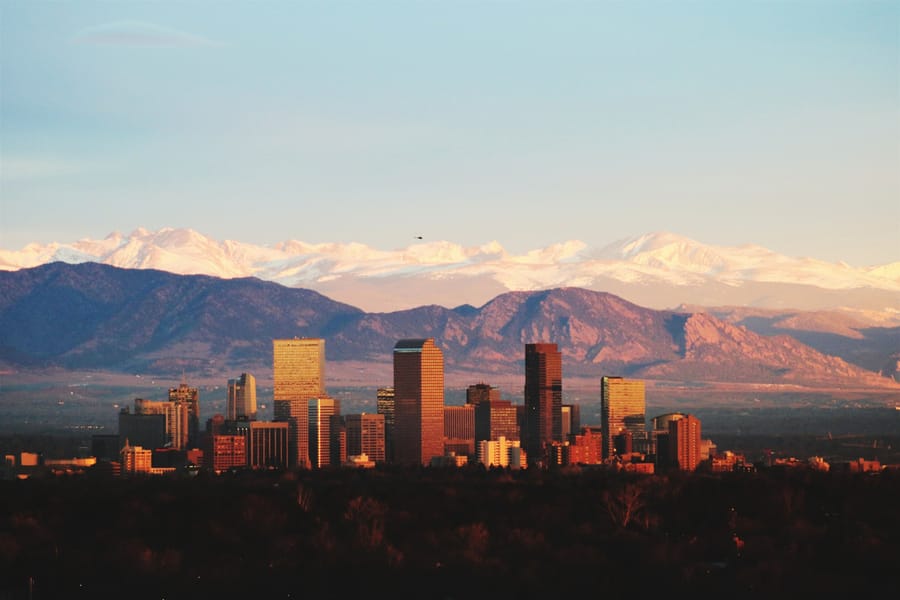
In Colorado, we’re used to doing things differently. We adjust our baking recipes, we stay extra hydrated, and we know that a mile-high hike feels a lot different than a walk on the beach. But there is one area of Colorado life where the “thin air” factor is often completely ignored: our home’s air conditioning. Most people assume that an AC unit is a standard piece of machinery, but the reality is that altitude changes the fundamental physics of how your system cools your home. At Heart Heating, Cooling, Plumbing & Electric, we see the results of “sea-level thinking” every day, systems that struggle to keep up, high energy bills, and compressors that fail years before they should.
As we move into the 2026 cooling season, with Colorado experiencing more intense temperature swings and higher UV exposure, your AC’s ability to handle the altitude is more critical than ever. Whether you’re in a historic bungalow in Denver or a modern estate in the foothills of Evergreen, your HVAC system is operating in an environment it wasn’t originally designed for without specific modifications. This guide explores the unique challenges of high-altitude cooling and how a “Heart-certified” installation ensures your system thrives at peak performance, even at 5,000 feet and above.
The Science of “Thin Air” and Cooling
To understand why altitude matters, you have to look at the air itself. In the Denver metro area, the air is about 17% to 20% less dense than it is at sea level. In mountain communities like Aspen Park or Black Hawk, that percentage is even higher.
-
Heat Transfer Loss: Air conditioners don’t actually “create” cold; they remove heat. They do this by blowing air over a cold coil. If the air is thin, there are fewer molecules available to grab that heat and carry it away.
-
Pressure Dynamics: Refrigerant relies on pressure changes to move through your system. Lower atmospheric pressure at high altitudes changes the “boiling point” of the refrigerant inside your lines, which can throw off the entire cooling cycle if not properly calibrated.
-
The “Work Harder” Effect: Because each cubic foot of air carries less “cooling power,” your system has to move significantly more air volume to achieve the same result you’d get at sea level.
Why Standard Sizing Doesn’t Work in the Rockies
If a contractor tries to size your AC based on a generic “square footage” chart they found online, they are likely setting you up for failure. In Colorado, we have to account for the “Altitude Tax.”
Standard sea-level sizing calculations almost always result in an undersized system for Colorado homes. As a rule of thumb, for every 1,000 feet you rise above 4,000 feet, you need to add roughly 2% to 3% to your system’s cooling capacity. By the time you reach 5,280 feet in Denver, a unit that was rated for 36,000 BTUs (3 tons) at sea level is effectively only delivering about 30,000 BTUs. At Heart HCPE, we perform master-level “Manual J” load calculations that specifically factor in Colorado’s altitude, ensuring your system has the “muscle” to handle the thin air.
How Altitude Stresses Your System’s “Heart”
Operating an AC at high altitude without proper adjustments is like asking an athlete to run a marathon in the Himalayas without training. It puts extreme stress on the most vital and expensive components of your system.
-
The Compressor: The compressor is the “heart” of your AC. At high altitudes, it has to work significantly harder to compress refrigerant to the necessary pressures. This extra work generates more heat, which can lead to “internal overload” and premature burnout.
-
The Blower Motor: Moving “thin” air is actually harder on a motor. To get the same cooling effect, the fan has to spin faster or run longer. Without high-altitude adjustments, these motors often run hotter and fail years earlier than expected.
-
Electrical Insulation: Thinner air is actually a poorer electrical insulator. In high-voltage systems, this increases the risk of “flashover,” where electricity jumps between components, which can fry sensitive circuit boards and motor controls.
Refrigerant and Airflow: The Fine-Tuning Secret
When a new AC unit arrives from the manufacturer, it is typically charged with refrigerant meant for sea-level conditions. Installing it “out of the box” in Colorado is a recipe for inefficiency.
-
Charge Recalibration: At high altitudes, the refrigerant charge must be fine-tuned using specialized gauges that account for the lower atmospheric pressure. An “off-the-shelf” charge will lead to poor heat exchange and sky-high utility bills.
-
Blower Speed Adjustments: To compensate for the thin air, our technicians often have to increase the blower fan speed. This ensures that enough air molecules are passing over the evaporator coil to prevent it from freezing up, a common high-altitude problem.
-
Ductwork Considerations: Because we have to move more air to get the same cooling, your ductwork needs to be up to the task. Undersized ducts in a high-altitude home create “static pressure” that can choke your system and drive up energy costs.
2026 Colorado Savings: Rebates for High-Altitude Homes
The good news for Colorado residents in 2026 is that the state and federal governments are offering massive incentives to help you upgrade to high-altitude-ready technology.
-
Colorado HEAR Program: In 2026, low-to-moderate-income households can access up to $8,000 in rebates for “Cold Climate” heat pumps, which are specifically designed to handle the altitude and temperature extremes of the Rockies.
-
Xcel Energy’s Mountain Energy Project: If you live in specific high-altitude ZIP codes like 80424, 80435, or 80498, Xcel Energy is offering rebates that are 3x to 6x larger than the standard program, up to $7,500 per ton for certain systems.
-
Launch Bonus: Many 2026 programs include a “Launch Bonus” (often an extra $2,000) if your system is installed and invoiced by mid-April.
At Heart HCPE, we specialize in navigating these complex 2026 rebate programs. We ensure your system meets the strict “Cold Climate” specifications required to unlock these thousands of dollars in savings.
Trust Heart Heating, Cooling, Plumbing & Electric
At Heart Heating, Cooling, Plumbing & Electric, we don’t just work in Colorado; we are part of the Colorado landscape. We understand that a home in Arvada has different needs than a home in Bailey. That’s why every system we install comes with high-altitude calibration as a standard, not an “add-on.” When you choose Heart, you are choosing a team that knows how to make your home’s infrastructure thrive in the thin mountain air.
Peak Performance for Your Colorado Home
Your geography shouldn’t be a hurdle to your comfort. By acknowledging the unique physics of high-altitude cooling and choosing a partner who understands the “Colorado Factor,” you can enjoy a home that is consistently cool and efficient. Don’t let sea-level thinking drive up your energy bills or cut your system’s life short. Invest in a system that is built and tuned for the peaks.
Ensure your AC is ready for the Mile High summer by reaching out to Heart Heating, Cooling, Plumbing & Electric today for a professional high-altitude system audit.
Get In Touch With Heart Heating, Cooling, Plumbing, Electric
Full Service Home Comfort
Heating, cooling, plumbing, and electrical services come together to support comfort, safety, and reliability throughout your home. From routine care to repairs and system upgrades, each service is handled with attention to detail and a focus on long term performance. Trusted solutions help keep everything running smoothly through every season.